
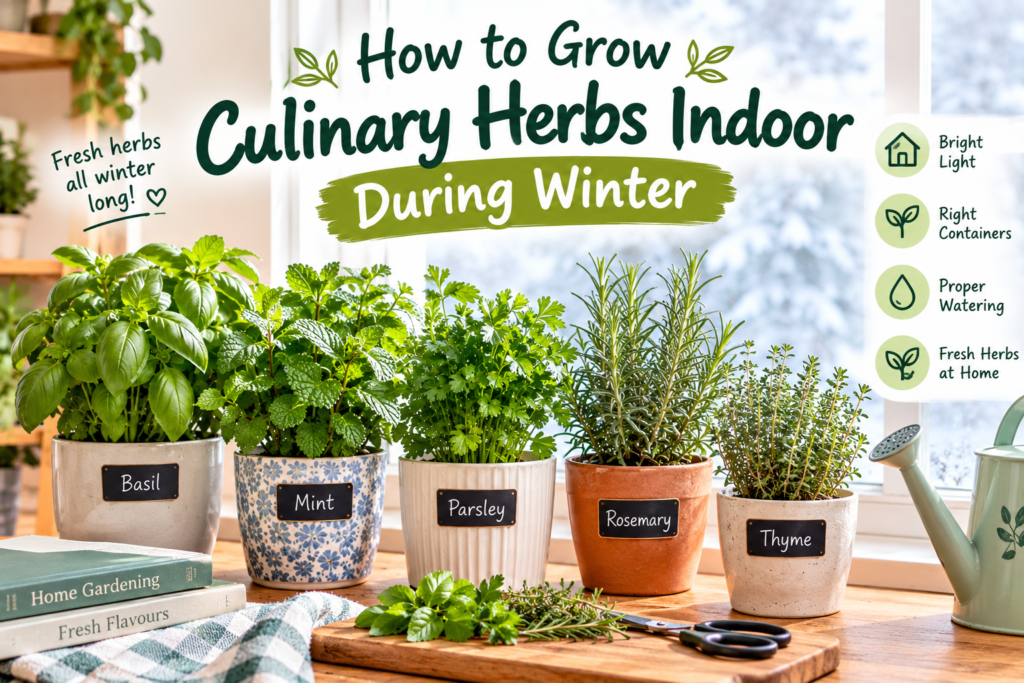
Easily grow culinary herbs indoor in winters
There is something deeply satisfying about plucking fresh coriander leaves, fragrant mint sprigs, or earthy methi greens while chilly winter winds blow outside your window. When backyards and outdoor gardens slow down for the cold season, bringing your edible garden indoors turns winter into a cozy, flavorful season of homegrown harvests.
In fact, with a bright windowsill, a lightweight potting mix, and a balanced watering routine, anyone can cultivate a thriving indoor herb garden.
Here is your complete guide ,how to grow easily 10 herbs indoor during winter —including everyday kitchen favorites like coriander, mint, methi (fenugreek), and dill (shepu).
Why Winter Is Perfect for Indoor Herb Gardening
1.Vibrant Flavor on Demand: Store-bought leafy herbs wilt quickly in the fridge and often come wrapped in single-use plastic. Growing your own guarantees zero waste and fresh flavor right at cooking time.
2.Cooley Indoor Temperatures: Many soft green herbs—especially coriander, methi, and dill—prefer mild temperatures between 55°F and 70°F (13°C to 21°C). Summer heat often causes them to bolt (flower and turn bitter), but winter conditions keep them leafy and sweet.
3.Natural Refreshment: Tending to green foliage during cold, dark months lifts your mood, improves indoor humidity, and adds a natural, fragrant decorative element to your kitchen or living space.
Culinary Herbs to Grow During Winter at Home
While warm-weather tropical plants struggle without heavy sunlight, the eight herbs below are resilient, quick to grow, and perfectly suited for indoor pots and containers.
1. Coriander (Dhania)
Coriander is one of the easiest and most useful herbs to grow during winter. Its fresh green leaves add flavour to curries, dals, chutneys, soups, and salads.
How to grow coriander
Choose a container at least 15–20 cm deep with drainage holes. Fill it with loose, well-draining potting mix and sow coriander seeds about 1–2 cm deep.
For quicker germination, gently split the round seeds into two halves without crushing them. Soak them briefly if you wish, then sow them directly into the pot. Keep the soil lightly moist until seedlings appear.
Coriander generally prefers cool weather and around 3–5 hours of sunlight, with more light beneficial in mild conditions. In very cold or harsh conditions, protect the pot from frost.
Harvesting tip: Begin picking the outer leaves when plants are established. For a continuous supply, sow a small new batch every two to three weeks.
2. Mint (Pudina)
Mint is a favourite for chutneys, raita, refreshing drinks, and homemade herbal tea. It is also a useful choice for beginners because it grows readily when provided with suitable moisture and light.
How to grow mint
The easiest method is to grow mint from a healthy stem cutting or a small nursery plant. Place it in a container filled with fertile, well-draining soil.
Mint grows well in bright light and partial sunlight. Around 3–5 hours of gentle sunlight is a useful starting point, especially in cooler weather.
Keep the soil evenly moist, but never leave the roots sitting in water.
Mint spreads quickly, so it is best grown in a separate pot rather than directly beside other herbs.
Harvesting tip: Pinch the growing tips regularly to encourage bushier growth. Avoid removing too many leaves at once, as the plant needs foliage to keep growing.
3. Fenugreek (Methi)
Fenugreek is an excellent winter herb for Indian households. Its tender leaves are used in methi parathas, sabzi, dals, and many other dishes. It grows quickly from seed, making it a satisfying choice for first-time gardeners.
How to grow methi
Take a shallow container with drainage holes and fill it with loose potting mix. Scatter fenugreek seeds evenly over the soil, cover them with a thin layer of soil, and water gently.
Keep the container in a sunny location. Fenugreek usually germinates within a few days under suitable conditions and can produce tender leaves in approximately three to four weeks.
Water when the top layer of soil begins to dry. Avoid overwatering, particularly during cold weather.
Harvesting tip: Cut the young leaves when they are around 10–15 cm tall, leaving enough growth for further development if you want another harvest.
4. Parsley
Parsley is a versatile herb used in salads, soups, sauces, and vegetable dishes. It grows well in cooler weather and adds a fresh green touch to a home herb garden.
How to grow parsley
Parsley grows best in a pot approximately 20–25 cm deep, filled with fertile, well-draining soil. Sow the seeds shallowly and keep the soil consistently moist while waiting for germination.
Parsley can take longer to germinate than coriander or fenugreek, so patience is important. It generally benefits from several hours of sunlight each day.
In regions with cold winter nights, place the container in a sheltered, sunny spot.
Harvesting tip: Pick the outer stems first, cutting them near the base while allowing the centre of the plant to continue producing new leaves.
5. Dill (Suva)
Dill is a delicate, fragrant herb that works beautifully in Indian vegetable dishes, lentils, soups, and salads. Its feathery leaves have a distinctive flavour and can add variety to your winter cooking.
How to grow dill
Dill develops a long taproot, so choose a reasonably deep pot rather than a very shallow planter. Sow the seeds directly into the container because dill does not always respond well to transplanting.
Place the pot where it receives good sunlight, ideally around 4–6 hours daily when conditions permit. Use loose soil and water carefully, allowing excess moisture to drain away.
Avoid overcrowding the seedlings, as good airflow helps plants remain healthy.
Harvesting tip: Start harvesting a small number of leaves once the plant is established. Regular, light harvesting allows you to enjoy its flavour without weakening the plant.
6. Chives
Chives are a useful herb for people who enjoy mild onion-like flavour. Their slender green leaves can be added to omelettes, soups, salads, sandwiches, and savoury snacks.
How to grow chives
Grow chives from seeds or a small nursery plant in a pot with good drainage. Use a loose potting mix enriched with a little mature compost.
Chives prefer a sunny position and regular but moderate watering. In cooler weather, they can grow more slowly, so avoid expecting rapid growth during particularly cold spells.
Harvesting tip: Cut the leaves a few centimetres above the soil instead of pulling the entire plant out. This encourages fresh growth.
7. Thyme
Thyme is an aromatic herb commonly used to season roasted vegetables, soups, and other savoury dishes. It is a good option for gardeners who want to try herbs beyond the usual Indian kitchen varieties.
How to grow thyme
Choose a pot with excellent drainage. Thyme prefers a light, well-draining growing medium and a sunny position.Unlike mint, thyme does not like constantly wet soil.
Allow the upper layer of soil to dry before watering again, especially in cool weather when evaporation is slower.
In areas with heavy winter rain or very cold nights, keep the plant protected and avoid leaving the container in a waterlogged spot.
Harvesting tip: Trim small sprigs as needed. Avoid cutting deeply into old, woody stems, as this may limit new growth.
8. Rosemary
Rosemary is a fragrant, evergreen herb used in roasted potatoes, vegetable dishes, soups, and marinades. It can be a lovely addition to a sunny balcony or terrace garden.
How to grow rosemary
Start with a healthy nursery plant or a rooted cutting. Rosemary grows best in a container with excellent drainage and plenty of sunlight.
Water thoroughly, then let the upper portion of the soil dry before watering again. Rosemary is more likely to suffer from overwatering than from a brief period of slightly dry soil.
Protect it from severe frost and cold winds. In humid regions, good airflow and a well-draining potting mix are especially important.
Harvesting tip: Snip small, tender sprigs when required. Avoid removing too much foliage at one time.
9. Oregano
Oregano is a popular culinary herb for pasta sauces, pizza, roasted vegetables, and homemade seasonings. It can grow well in a container and is worth trying if you enjoy experimenting with different flavours.
Sow seeds or plant a small nursery-grown herb in a pot with good drainage. Keep it in a sunny location and use a potting mix that does not stay soggy.
Water when the soil begins to dry, and avoid excessive feeding because too much fertiliser may encourage leafy growth at the expense of strong flavour.
Oregano generally prefers mild conditions. During very cold spells, protect the plant from frost and strong winds.
Harvesting tip: Trim the upper stems regularly to encourage branching and maintain a compact plant.
10. Garlic Chives
Garlic chives have flat, green leaves with a gentle garlic flavour. They can be used in stir-fries, soups, savoury pancakes, and vegetable dishes.
How to grow garlic chives
Plant seeds or divide an established clump in a container with drainage holes. Use fertile, well-draining soil and place the pot where it receives good sunlight.
Keep the soil moderately moist while the plant establishes itself. Established plants generally need less frequent watering during cool weather, depending on soil and local conditions.
Harvesting tip: Cut the outer leaves when they are long enough to use, leaving the central growth intact for continued production.
Essential Winter Care: Sunlight, Soil, & Watering
Indoor growing during winter requires minor adjustments compared to summer care because natural day length is shorter and home heating alters humidity levels.
1. Maximize Daylight (or Supplement with LEDs)
Winter days are shorter, and the sun sits lower on the horizon.
Best Window Placement: South-facing windows offer the longest hours of direct sunlight. West-facing windows are your next best option.
Grow Lights: If your windows are blocked or dark, a simple $15–$25 full-spectrum LED grow light kept on for 12 to 14 hours daily works wonders.
2. Avoid Overwatering
Overwatering is the #1 cause of indoor herb failure in winter. Because plants grow more slowly in winter, they consume less water.
Rule of Thumb: Always poke your finger one inch into the soil. If it feels moist, wait a few days.
Drainage is Mandatory: Ensure every pot has drainage holes. Standing water leads directly to root rot.
3. Protect Plants from Drafts & Furnace Heat
Keep plant foliage from touching cold windowpanes on freezing nights.
Avoid placing pots directly over heating vents or radiators, which dry out foliage too rapidly.
Conclusion:How to Grow Culinary Herbs indoors during winter
Growing herbs during winter at home is a simple way to make your balcony, terrace, or windowsill more useful and enjoyable. From familiar coriander and methi to aromatic rosemary and thyme, there are options for almost every level of gardening experience.
This winter, try sowing your favourite kitchen herbs and make harvesting fresh greenery part of your everyday routine. Your garden may be small, but the satisfaction of growing something yourself can be surprisingly big.
Internal Link/ READ MORE : how-to-grow-10-herbs-in-pot-at-home
2. how-to-grow-mint-at-home-easy-care-guide
External Link/ READ MORE : 5 Magical Herbs to Grow on a Sunny Windowsill
Frequently Asked Questions (FAQs)
1. Which herbs are easiest to grow during winter at home?
Coriander, fenugreek, mint, and parsley are good starting choices. Coriander and fenugreek are especially convenient for Indian kitchens, while mint is easy to grow from a healthy cutting.
2. When should I start a winter herb garden in India?
October and November are suitable starting months for many cool-season herbs in northern India. In warmer regions, planting dates may differ. Check local temperatures and the growing requirements of each herb.
3.Can I grow mint from kitchen cuttings in winter?
Yes! Take a 4-to-5-inch healthy mint stem from store-bought fresh mint, strip the bottom leaves, and place it in a clear glass of clean water on a windowsill. Roots will appear within 7 to 10 days, after which you can transfer it to a potting soil container.
4.How do I grow methi and coriander fast indoors during winter?
Soak methi seeds overnight in water to trigger rapid germination. For coriander, gently crush whole seeds into two halves using a rolling pin before sowing. Place both trays in a warm, sunny window, and you will see sprouts within 3 to 5 days.
5. Can I grow several herbs in one pot?
It is usually better to grow herbs in separate pots, especially when their water needs differ. Mint spreads quickly, while rosemary and thyme prefer drier soil. Separate containers make watering and harvesting easier.