
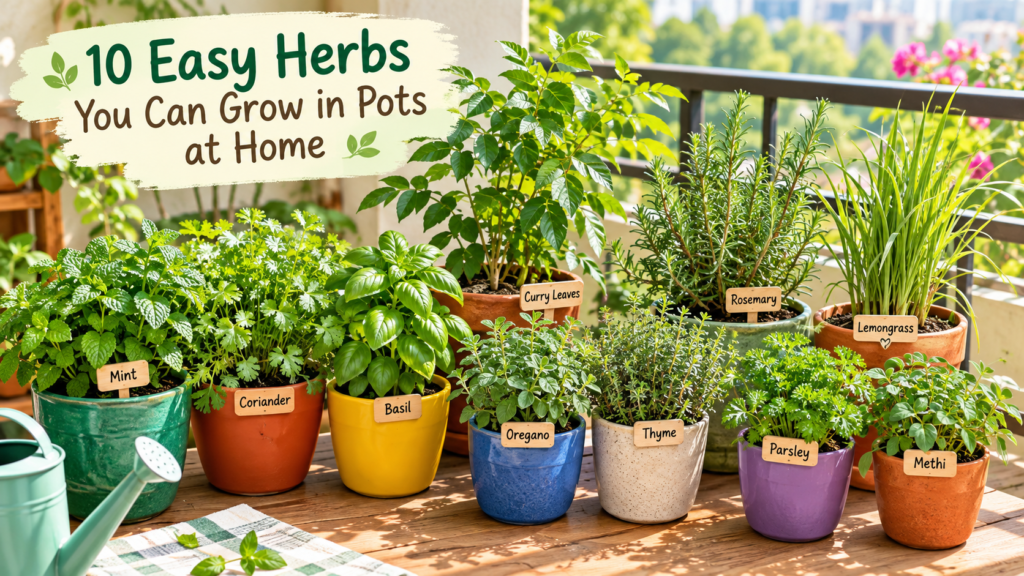
Have you ever needed a few fresh mint leaves for tea or some coriander for dinner, only to discover that you do not have any at home?
That is one of the many benefits of growing herbs in pots: you can simply step outside, harvest what you need, and return to the kitchen.
. Herbs are easy to grow,and can be good for your health as well tasting delicious.
Starting a herbs garden is a great way for beginner gardeners to get into growing their own produce .
Sunny balcony, terrace, windowsill, or small outdoor area can be sufficient. Many herbs grow well in containers and require only basic gardening knowledge.
Whether you are a complete beginner or already have a few plants, here are 10 easy herbs you can grow in pots at home.
Why Grow Herbs in Pots?
Growing herbs at home offers several practical benefits.You can access fresh herbs whenever needed, reduce the need to purchase small packets from the market, and add greenery to your living space. Gardening can also transform an ordinary balcony into an attractive and productive area.Perhaps most importantly, you can begin with just one or two pots.Choose herbs that you regularly use and observe how they grow before expanding your collection
1. Mint
Mint is one of the easiest herbs to grow in a pot, and it can grow remarkably quickly.
Its fresh leaves are ideal for tea, chutneys, salads, raita, lemonade, and many other dishes.
How to Grow Mint in a Pot
- Use a pot with adequate drainage.
- Plant mint cuttings or a healthy young plant.
- Keep the soil slightly moist.
- Provide bright light and some morning sunlight.
- Trim the plant regularly to encourage new growth.
Tip: Mint spreads quickly, so it is generally best to grow it in a separate pot.
2. Coriander
Coriander is a popular kitchen herb, particularly in Indian cooking. Both its fresh leaves and seeds are useful.
It grows well in containers and does not require much space.
How to Grow Coriander in Pots
- Choose a reasonably wide pot rather than a very deep one.
- Use loose, well-draining soil.
- Sow coriander seeds directly into the pot.
- Keep the soil lightly moist during germination.
- Provide plenty of sunlight.
You can begin harvesting the leaves once the plants are well established.
Tip: Harvest a few leaves at a time instead of removing the entire plant. This allows you to enjoy multiple harvests.
3. Basil in Pots
Basil is another excellent herb for container gardening. Its fragrant leaves can be used in pasta, salads, sauces, sandwiches, soups, and homemade pesto.Basil prefers warm conditions and plenty of sunlight, making it particularly suitable for sunny balconies and terraces.
Basil Growing Tips
- Buy a pot with drainage holes.
- Place it where it receives several hours of sunlight.
- Water when the top layer of soil feels dry.
- Pinch off the growing tips regularly.
- Remove flowers if you want the plant to focus more energy on leaf production.
Tip: Regular harvesting encourages basil to develop a fuller, bushier shape.
4. Curry Leaves in Pots
growing a curry leaf plant at home can be highly convenient.
Fresh curry leaves add a distinctive aroma to dals, curries, chutneys, sambhar, and tempering.
A curry leaf plant can grow successfully in a large pot, although it generally requires more space than smaller herbs such as mint or coriander.
Curry Leaf Plant Care
- Use a reasonably large container.
- Provide plenty of sunlight.
- Avoid keeping the soil constantly waterlogged.
- Feed the plant occasionally during active growth.
- Protect young plants from extreme cold.
Tip: Do not be concerned if your curry leaf plant grows slowly at first. With proper care, it can gradually develop into a healthy and attractive potted plant.
5. Oregano
Oregano is an excellent choice if you enjoy pizza, pasta, roasted ve6getables, and Mediterranean-style dishes.It does not require a large container and generally prefers drier conditions than herbs such as mint.
How to Grow Oregano
- Use well-draining soil.
- Place the pot in a sunny location.
- Water when the soil begins to dry.
- Avoid overwatering.
- Trim the plant regularly to encourage fresh growth.
Oregano is particularly suitable for gardeners who occasionally forget to water their plants.
6. Thyme
Thyme is a small, aromatic herb that grows especially well in containers.Its compact growth makes it suitable for balconies, windowsills, and small gardens.Fresh thyme can be used with vegetables, soups, roasted dishes, and a variety of other recipes.
Thyme Care Tip.
- Provide plenty of sunlight.
- Use well-draining soil.
- Avoid keeping the soil constantly wet.
- Harvest small amounts regularly.
- Trim lightly to maintain a compact shape.
If you have limited space, thyme is an excellent option.
7. Rosemary
Rosemary is another excellent herb for pots, particularly if you have a sunny balcony or terrace.Its needle-like leaves have a strong fragrance and are commonly used with roasted vegetables, potatoes, breads, and other savoury dishes.
How to Grow Rosemary in a Pot
Rosemary prefers:
- Plenty of sunlight
- Well-draining soil
- Moderate watering
- Good air circulation
- A container with drainage holes
The most common mistake beginners make with rosemary is overwatering.Allow the soil to dry somewhat between waterings rather than keeping it constantly moist.
8. Lemongrass
Lemongrass is a useful and attractive addition to a home herb garden.It can be used to prepare refreshing herbal tea and is also popular in many Asian dishes.The plant grows into a leafy clump and can enhance the appearance of a balcony or terrace.
Lemongrass Growing Tips
- Use a medium-to-large pot.
- Provide plenty of sunlight.
- Water regularly, particularly during hot weather.
- Use fertile, well-draining soil
- Harvest older stalks from the outside of the clump.
- Tip: Provide sufficient space, as lemongrass can become considerably larger than smaller herbs.
9. Parsley
Parsley is often associated with Western cooking, but it is a versatile herb that can be used in salads, soups, sauces, sandwiches, and garnishes.It grows well in containers and does not require a large garden
.
How to Grow Parsley
- Choose a pot with drainage holes.
- Use rich, well-draining potting soil.
- 7Keep the soil moderately moist.
- Provide bright light.
- Harvest the outer stems first.
Parsley can take some time to germinate, so do not be discouraged if seedlings do not appear immediately.
10. Fenugreek (Methi)
For Indian households, fenugreek—or methi—is one of the easiest and most rewarding herbs to grow in a container.Fresh methi leaves can be grown in a relatively shallow pot and harvested while the plants are young and leafy.
How to Grow Methi in a Pot
- Choose a wide container with drainage holes.
- Sprinkle methi seeds over the soil.
- Cover them lightly with soil.
- Water gently.
- Place the pot in a sunny location.
- Harvest the tender leaves once the plants are well established.
Freshly grown methi can be used in parathas, curries, daal and vegetable dishes.
READ MORE-“best-microgreens-and-herbs-to-grow-indoors”
A Simple Herb Pot Setup for Beginners
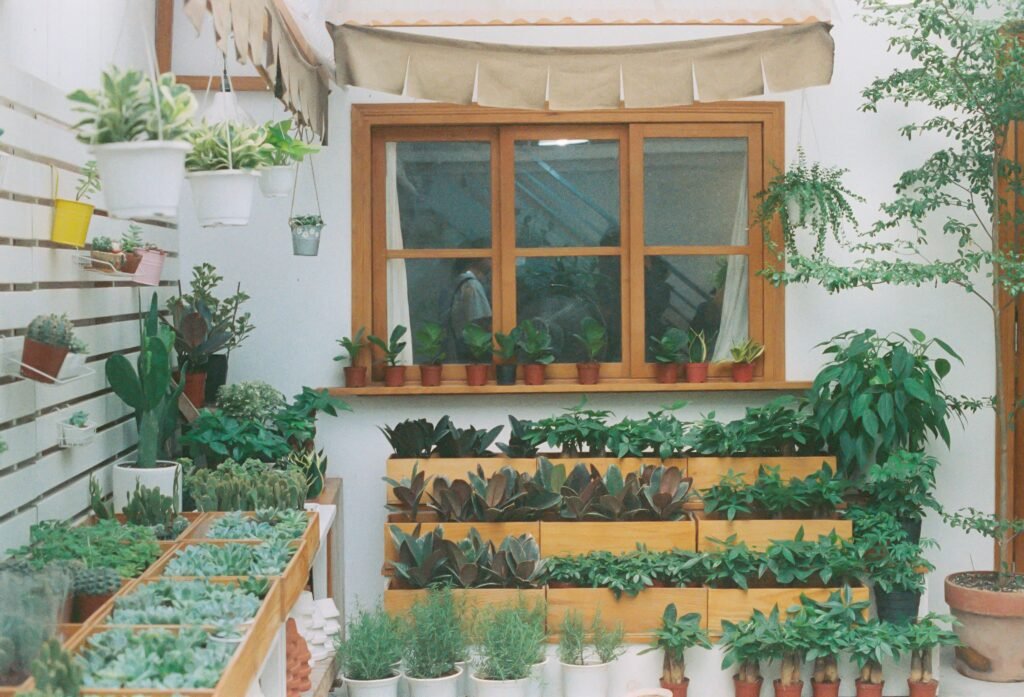
If you are new to container gardening, you do not need to grow all ten herbs at once.
Begin with three:
Mint + Coriander + Methi
These are practical choices for many Indian kitchens and can provide the satisfaction of harvesting fresh herbs relatively quickly.If you have a sunny balcony, you can gradually add basil, rosemary, thyme, or oregano.
How to Keep Herbs Healthy in Pots
Growing herbs is relatively straightforward, but a few basic practices can make a significant difference.
1. Choose Pots with Drainage Holes
This is essential. Excess water must have a way to escape.
2. Avoid Overwatering
More water does not necessarily result in healthier plants. Constantly wet soil can damage the roots.Check the soil before watering.
3. Provide Adequate Sunlight
Most culinary herbs prefer plenty of light, although the exact requirement varies by plant and climate.If your balcony receives intense afternoon sunlight, particularly during very hot weather, some plants may benefit from protection during the hottest part of the day.
4. Harvest Regularly
Do not hesitate to use your herbs.Regular harvesting and trimming can encourage many herbs to produce fresh growth.
5. Feed Your Plants Occasionally
Container plants have limited access to nutrients compared with plants growing in the ground.Applying suitable compost or a balanced plant fertilizer according to the product instructions can help support healthy growth.
Common Mistakes to Avoid When Growing Herbs
Even easy-to-grow herbs can struggle when their basic requirements are not met.Common mistakes include:
- Using pots without drainage holes
- Watering according to a fixed schedule without checking the soil
- Keeping sun-loving herbs in very dark locations
- Planting fast-spreading mint with other herbs
- Using a container that is too small
- Ignoring pests
- Harvesting too aggressively
- Expecting every herb to grow equally well in every season
Remember that gardening requires observation.If a plant begins to look unhealthy, examine the soil, sunlight, watering practices, and pot size before assuming that you have made a serious mistake.
Final Thoughts
To grow herbs in pots at home you only need a few pots, good-quality soil, sunlight, water, and patience can transform even a small balcony into a productive mini herb garden. Start with herbs that you regularly use in your kitchen. Mint, coriander, basil, curry leaves, oregano, thyme, rosemary, lemongrass, parsley, and methi are all worth considering, depending on your climate, available space, and cooking preferences. There is no need to achieve perfect results immediately.Your first few pots are opportunities to learn. Some plants may thrive, others may struggle, and one may even grow vigorously enough to take over its container. That is part of the experience of growing your own food.Choose a pot, select an herb, prepare the soil, and begin cultivating your home herb garden
External Link-“How to Start a Herb Garden”
FAQ: Growing Herbs in Pots at Home
1. What is the easiest herb to grow in a pot?
Mint is one of the easiest herbs for beginners because it grows vigorously and adapts well to container cultivation. Coriander and methi are also practical choices for many home gardeners.
2. Can herbs be grown on a balcony?
Yes. Many herbs can grow successfully on balconies provided they receive suitable light and are planted in containers with adequate drainage.
3. How often should I water herbs in pots?
There is no single watering schedule suitable for every herb. Check the soil before watering. Provide moisture when necessary while avoiding constantly waterlogged conditions.
4. Can I grow herbs indoors?
Yes. Some herbs can be grown indoors if they receive sufficient bright light. A sunny windowsill can be suitable for certain varieties.
5. Which herbs are best for Indian kitchens?
Mint, coriander, curry leaves, methi, and lemongrass are particularly useful choices for Indian cooking.
6. Can I grow mint and other herbs in the same pot?
It is generally preferable to grow mint separately because it spreads aggressively and may compete with other plants for space and nutrients.
7. Do herbs need direct sunlight?
Many culinary herbs prefer several hours of bright light or direct sunlight, although their exact requirements vary. Check the needs of each herb and consider your local climate.
8. What size pot is best for growing herbs?
The appropriate pot size depends on the herb. Small herbs can often grow in smaller containers, while plants such as curry leaves and lemongrass require larger pots as they mature.