
We’ve all been there. You step into the kitchen for your morning chai or coffee, open the bin to toss a banana peel, and—BAM—a cloud of fruit flies greets you, accompanied by a smell that could wake the entire neighborhood. When humidity levels skyrocket, our kitchen wet waste turns into a high-speed decay zone. High moisture plus warm ambient air equals the ultimate breeding ground for bacteria, mold, and unwelcome insects. But keeping a fresh home doesn’t mean giving up on sustainable waste management.Here is how you can outsmart high humidity, control odor, and keep your green routine running smoothly.
Why Does Kitchen Wet Waste Become Difficult During Humid Weather.
Humidity means there is more moisture in the surrounding air.
Kitchen scraps already contain plenty of water, so the combination can speed up decomposition.
- This can lead to:Bad odours
- Fruit flies and other insect
- Excess moisture in the waste bin
- Leakage from food scraps
- Faster rotting of vegetables and fruit
- An unpleasant kitchen environment
Wet waste is biodegradable, which is actually a good thing. It means nature can break it down.
The trick is to manage that decomposition properly instead of allowing it to happen inside an overflowing kitchen bin.
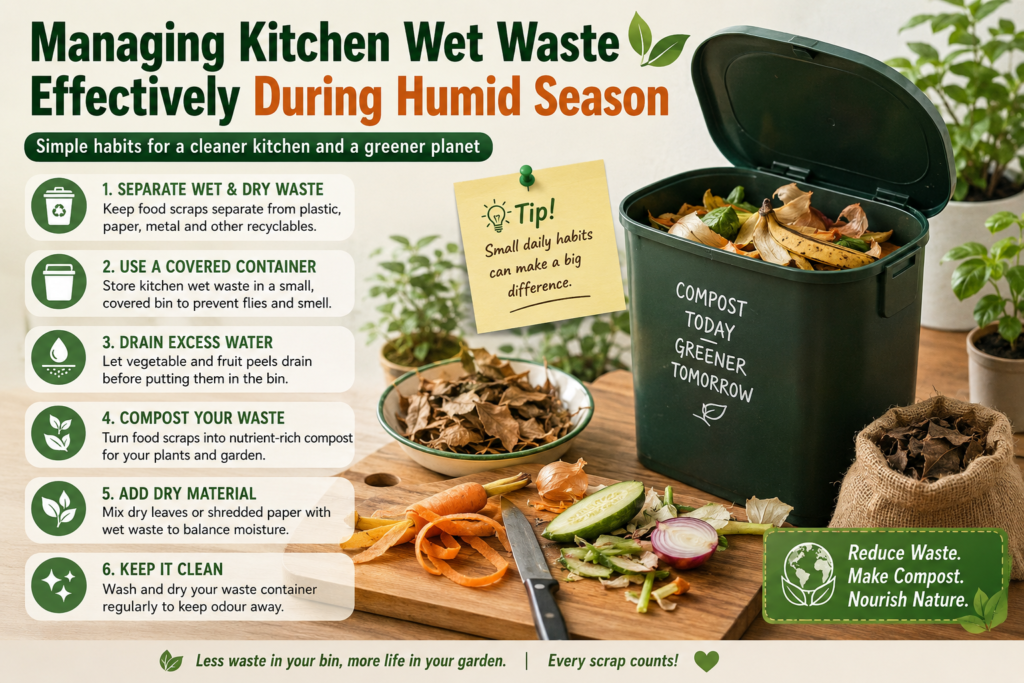
1. Separate Wet and Dry Waste
This is probably the most important habit.
Keep wet or biodegradable waste separate from dry waste such as plastic wrappers, glass, metal and other recyclable
Common kitchen wet waste includes:
- Vegetable and fruit peels
- Tea leaves
- Coffee grounds
- Vegetable trimmings
- Fruit scraps
- Eggshells
- Small amounts of leftover food
- Wilted flowers
- Some garden waste
Keeping wet waste separate makes composting much easier and prevents recyclable materials from becoming contaminated.It also follows the basic principle of source segregation promoted through India’s waste-management efforts.
2. Don’t Let Wet Waste Sit in the Kitchen for Days
During humid weather, fresh food scraps can become unpleasant surprisingly quickly.
instead of allowing your kitchen bin to become a mini compost pile, empty it regularly.
If possible, transfer wet waste to your composting system daily or whenever the container becomes full.
A small container is often better than a huge one because it encourages frequent emptying.
And honestly, nobody wants to open a forgotten kitchen bin after three days of humid weather!
3. Drain Excess Water Before Putting Waste in the Bin
Moisture is one of the biggest problems with kitchen wet waste.
Before putting vegetable scraps into the waste container, allow excess water to drain.
For example:
Instead of:Washed vegetable peels → straight into the bin
Try:Washed vegetable peels → drain well → place in wet-waste container
You don’t need to squeeze everything completely dry. The goal is simply to avoid collecting unnecessary liquid at the bottom of the bin.
This becomes particularly useful if you are planning to compost the waste.
4. Use a Small Kitchen Waste Container
A small container with a lid can make wet-waste management much easier.
Choose one that is:Easy to wash
- Leak-resistant
- Easy to carry
- Covered with a lid
- Appropriate for your household size
- Avoid keeping a very large quantity of wet waste indoors.
A smaller container encourages you to empty it frequently, which can help reduce odours and insects.
5. Keep the Waste Bin Clean
Even if you empty your wet-waste container regularly, a little residue can remain at the bottom.
During humid weather, that residue can quickly become smelly.
Wash the container regularly with water and a suitable household cleaning method, then dry it properly before using it again.
A clean and dry bin is much easier to manage than one with a permanent layer of old food residue.
6. Start Composting Your Kitchen Waste
Here’s where kitchen waste gets interesting.
Instead of thinking:
“This is garbage.”
Try thinking:
“This is a future soil resource.”
Many kitchen scraps can be composted at home.Vegetable peels, fruit scraps, tea leaves, coffee grounds and other suitable biodegradable materials can become compost when managed correctly.
Composting converts organic waste into a soil-conditioning material that can be useful in gardening.
Government waste-management guidance also recognises composting and vermicompost as methods for processing biodegradable waste.
For a garden lover, this is a lovely little cycle:Kitchen → Compost → Garden → Plants → More Kitchen Scraps → Compost
Nothing feels quite as satisfying as watching yesterday’s vegetable peels help nourish today’s plants.
7. Remember: Compost Needs a Balance
One common mistake beginners make is putting only wet kitchen scraps into a compost bin.That can create a soggy, smelly mixture.
Compost generally works better when moist “green” materials are balanced with drier “brown” materials. Green materials
These are generally nitrogen-rich materials such as:
- Fruit scraps
- Vegetable waste
- Fresh plant material
- Coffee grounds
Brown materials
These are generally carbon-rich materials such as:Dry leaves
Shredded untreated paper or cardboard
Dry plant material Small amounts of suitable sawdust
The Central Pollution Control Board describes a preferred carbon-to-nitrogen ratio around 30:1 for composting and notes that food scraps and leaves contribute different nutrient characteristics.
You don’t need to become a compost scientist, though.
For home composting, a simple rule is:
Too wet? Add more dry brown material.
Too dry? Add a little moisture.
8. Don’t Add Too Much Food at Once
If you’re composting at home, resist the temptation to empty a huge quantity of kitchen scraps into the compost bin at once.
Add waste gradually and mix it with dry material.
Chopping large vegetable and fruit pieces into smaller pieces can also help them break down more easily.
And remember to keep the compost reasonably aerated.
A compost bin that becomes waterlogged and airless can develop unpleasant smells.
9. Be Careful With Cooked Food
Not every type of kitchen waste belongs in a simple home compost bin.
- Large amounts of:Oily food
- Very salty food
- Spicy food
- Meat
- Fish
- Dairy products
can create problems in some household composting systems.
The exact materials accepted depend on the type of composting method you use.
If you’re a beginner, start with straightforward vegetable and fruit scraps, dry leaves and other recommended compostable materials.
10. Use Dry Leaves to Control Excess Moisture
If you have plants, trees or a small garden, don’t throw away every dry leaf.
Dry leaves are useful for composting because they provide carbon-rich “brown” material.
When your compost becomes too wet, adding a layer of dry leaves can help absorb some moisture and improve the balance.
Shredded untreated cardboard or paper may also be useful in suitable quantities.
Think of dry leaves as your compost’s natural moisture-management tool.
11. Keep Fruit Flies Away
- Fruit flies can become especially annoying during warm and humid weather.
- To reduce the problem:Empty food scraps regularly
- Keep the kitchen bin covered
- Avoid leaving ripe fruit uncovered
- Clean sticky spills immediately
- Don’t allow old food residue to build up
- Keep your compost container properly managIf flies are already appearing around the compost bin, check whether the contents are excessively wet or whether too much fresh food waste has been addedAdding dry carbon-rich material and improving aeration can help bring the compost back into balance.
12. Freeze Certain Food Scraps If Necessary
Here’s a useful trick for households that produce wet waste slowly.
If you don’t have access to daily waste collection and don’t want food scraps sitting around, some suitable food scraps can be temporarily stored in the freezer in a sealed container or bag until collection or composting day.
This isn’t necessary for everyone, but it can be particularly useful for reducing smells during very humid periods.
Just make sure the material is appropriate for your intended disposal or composting method.
READ MORE–https://greenharvestguide.in/essential-guide-to-sustainable-living-green-harvest-guide/
13. Avoid Plastic Bags for Compost
If you’re composting kitchen waste, avoid mixing plastic bags with biodegradable material.
Even a bag labelled “biodegradable” or “compostable” may require specific industrial composting conditions.
For home composting, it’s simpler to add the appropriate organic material directly to the composting container according to the system’s instructions.
This keeps your compost cleaner and easier to manage.
14. What About Kitchen Waste water?
Another often-overlooked issue is the liquid produced while washing vegetables, dishes and food containers.
Don’t pour greasy cooking water into your garden or compost.
Oily waste water can create problems for soil and drainage.
Where appropriate, minimise grease entering drains and dispose of it according to local waste-management guidance.
For composting and waste-processing systems, preventing uncontrolled liquid leakage is important.
CPCB guidance for larger composting facilities specifically highlights the need to manage leach ate and prevent it from entering natural water bodies.
A Simple Humid-Weather Wet-Waste Routine
Here’s an easy routine you can follow at home.
Morning
Prepare a small covered container for the day’s biodegradable kitchen waste.During cookingSeparate vegetable and fruit scraps immediately.
After meals
Remove suitable biodegradable food waste rather than allowing it to remain mixed with other household rubbish.
Evening
Check the container.If it is full or beginning to smell, transfer the waste to your composting system or designated wet-waste collection.
Once or twice a week
Wash and dry the kitchen waste container thoroughly.
Regularly Check your compost bin.
If it looks too wet, add dry leaves or another suitable brown material. If it looks too dry, adjust the moisture according to your composting method.Simple habits make a surprisingly big difference.
The Bigger Benefit:
Less Waste, Better Gardening
Managing kitchen wet waste isn’t just about keeping your kitchen smelling fresh.
It can also reduce the amount of biodegradable waste going into mixed household garbage.
And if you compost at home, you get something useful in return.
Your kitchen scraps can become part of a gardening cycle that supports healthier soil and plants.
For someone who loves gardening, this makes waste management feel less like a chore and more like an extension of the garden.
Today’s vegetable peels could eventually become tomorrow’s compost.
That’s sustainability in a very practical form.
External Link–How to Manage Your Garbage During Rainy Season
Final Thoughts
Humid weather can make kitchen wet waste harder to manage, but it doesn’t have to become a daily headache.
Keep wet and dry waste separate, drain excess moisture, empty your kitchen container regularly and keep it clean.
If you have the space and interest, consider composting suitable kitchen scraps.
Most importantly, start small.You don’t need an expensive composting machine or a perfectly organised zero-waste kitchen on day one.
Start with one simple habit: separate your kitchen wet waste.
Once that becomes routine, the next steps—composting, reducing food waste and creating a more sustainable home—become much easier.
A cleaner kitchen, less waste and healthier plants?That’s a pretty good deal.
Frequently Asked Questions (FAQ)
1. How should I manage kitchen wet waste during humid weather?
Keep wet waste separate from dry waste, drain excess water, use a covered container and empty it regularly. Compost suitable biodegradable waste if possible.
2. Why does kitchen waste smell more during humid weather?
Food scraps contain moisture and organic matter. Warm, humid conditions can encourage faster decomposition, which may produce unpleasant smells if waste is left sitting for too long.
3. Can kitchen wet waste be composted at home?
Yes. Many fruit and vegetable scraps, tea leaves, coffee grounds and other suitable biodegradable materials can be composted at home using an appropriate composting method.
4. How can I stop my compost bin from becoming too wet?
Add dry brown materials such as dry leaves or suitable shredded untreated paper/cardboard, and mix the contents to improve aeration.
5. Can I put cooked food in a compost bin?
It depends on your composting system. Small quantities may be acceptable in some systems, but oily, salty, spicy or animal-based foods can create problems. Beginners are generally better off starting with simple fruit and vegetable scraps.
6. How often should kitchen wet waste be removed?
During warm and humid weather, removing it daily or whenever the container becomes full is a good practical approach. This helps reduce smells and insect problems.
7. Is composting kitchen waste good for gardening?
Properly finished compost can be useful as a soil amendment and can help return organic matter to the garden.
8. What is the easiest first step toward reducing kitchen waste?
Start by separating biodegradable kitchen waste from dry and recyclable waste. Once this becomes a habit, you can explore composting and other ways to reduce food waste.