
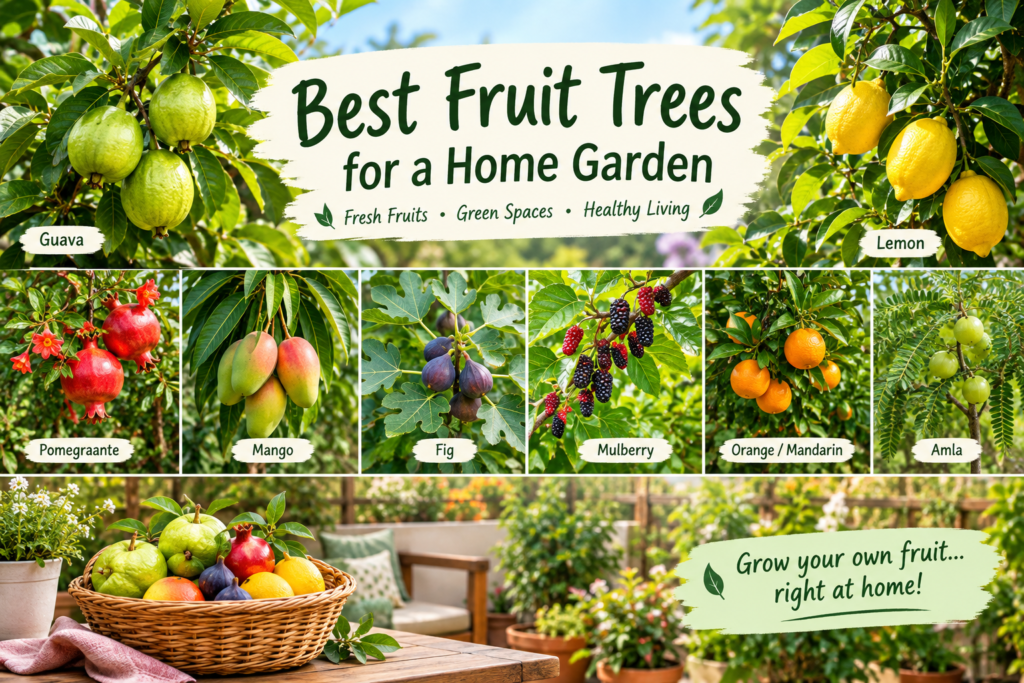
There is nothing quite like walking into your backyard, reaching up to a branch, and picking a warm, sun-ripened piece of fruit you grew yourself.
It completely ruins store-bought produce for you—in the best way possible!If you have been dreaming about starting your own backyard orchard, you might feel a little overwhelmed by choices.
Should you get apples or peaches?
Do you have enough space for a full-sized tree?
Will you have to wait five years just to harvest a single bite? Thanks to compact dwarf rootstocks and resilient varieties, you can grow high-yield fruit trees in large suburban yards, small patios, or urban balconies.
The best fruit trees for home gardens! Learn top varieties for small spaces, low-maintenance care tips, and dwarf choices for quick harvests.
Here is a practical, beginner-friendly guide to the absolute best fruit trees for a home garden, along with everything you need to know to pick the right ones.
What to Consider Before Buying a Fruit Tree
Before grabbing the prettiest sapling at your local nursery, take a quick minute to audit your outdoor setup:
1.Sunlight:
Most fruit trees are sun-lovers and need 6 to 8 hours of direct sunlight daily to produce sweet, heavy harvests.
2.Space & Rootstock:
Standard-sized trees can tower at 20+ feet tall, but dwarf (8–10 feet) and semi-dwarf (12–15 feet) trees give you full-sized fruit while fitting into tight spots or containers.
Pollination:
Some trees are self-fertile (you only need one tree to get fruit), while others require a second, different variety nearby for cross-pollination. If you have a small yard, prioritize self-fertile choices.
Chill Hours:
Fruiting trees like apples and stone fruits need a specific number of winter hours between 32°F and 45°F (0°C–7°C) to break dormancy and set fruit. Always verify your climate zone’s chill hours before buying!
5. Maintenance
Some trees require regular pruning, feeding, and pest monitoring. If you are a beginner, start with a low-maintenance variety.
External Link / READ MORE-“Top 10 Fruit Plants for Indian Home Garden in 2026”
10 Best Fruit Trees for a Home Garden
1. Guava
Guava is one of the most rewarding fruit trees for a home garden, especially in warm climates. It grows relatively quickly and can produce fruit within a few years when given proper care.
Why grow guava?
- Suitable for many Indian climates
- Can be maintained as a small tree
- Fragrant flowers and delicious fruit
- Generally easy for beginners
- Growing tip: Plant guava in full sun and prune it occasionally to maintain a manageable size.
2. Lemon
A lemon tree is practically a home-garden essential. Fresh lemons are useful in cooking, drinks, pickles, and countless household recipes.
Dwarf lemon varieties can also grow well in large pots, making them suitable for terraces and balconies with sufficient sunlight.
Growing tip: Use a container with drainage holes and avoid allowing the roots to sit in standing water.
3. Pomegranate
Pomegranate trees are attractive, drought-tolerant once established, and well suited to sunny home gardens. Their bright flowers also add ornamental value.
They can be trained as small trees or shrubs, making them useful when space is limited.
Growing tip: Avoid excessive watering and prune weak or overcrowded branches regularly.
5. Papaya
Papaya is technically a large herbaceous plant rather than a traditional woody tree, but it deserves a place on this list because it is one of the fastest ways to enjoy homegrown fruit.
Papaya plants grow quickly and can begin producing fruit much sooner than many fruit trees.
Growing tip: Plant in warm weather, provide good drainage, and protect the plant from strong winds.
6. Fig
Fig trees are excellent for gardeners who want a fruit tree that can be grown in containers.
Their attractive leaves and compact growth make them a lovely addition to patios and terraces.
With the right variety and adequate sunlight, figs can produce a satisfying harvest in a relatively small space.Growing tip: Use a large container, well-draining soil, and allow the plant plenty of sunlight.
7. Mulberry
Mulberry trees are fast-growing and can be surprisingly productive. Their sweet berries are enjoyed fresh or used in desserts, jams, and smoothies.They can become vigorous, so regular pruning is helpful in a small home garden.Growing tip: Plant in a sunny spot and prune after fruiting to control size and encourage fresh growth.
8. Amla (Indian Gooseberry)
Amla is a hardy fruit tree particularly suited to many parts of India. It tolerates heat and is valued for its distinctive sour fruit, which is commonly used in traditional foods and preparations.It is a good choice for gardeners looking for a long-lived, relatively resilient tree.Growing tip: Give it plenty of sunlight and avoid planting it in areas where water accumulates.
9. Orange or Mandarin
Citrus trees such as oranges and mandarins can make a garden feel cheerful and productive. Their glossy green leaves, fragrant flowers, and colorful fruits are a wonderful combination.Some compact citrus varieties are suitable for large containers.Growing tip: Feed citrus trees regularly during active growth and monitor for common pests such as aphids and leaf miners.
10. Apple (Suitable Climate or Low-Chill Varieties)
Apples are excellent for gardeners living in cooler regions or areas suitable for low-chill apple varieties. Not every apple variety performs well in warm climates, so selecting the right cultivar is essential.
Dwarf apple trees are especially useful for smaller spaces.
Growing tip: Research varieties suited to your local winter temperatures before purchasing a sapling.
Best Fruit Trees for Small Gardens
1. Fig Trees (Ficus carica)
If you want an almost unkillable tree that rewards you with gourmet fruit, plant a fig. Fig trees are exceptionally tough, heat-tolerant, and drought-resistant once established. Because they are self-fertile, you only need one to enjoy heavy yields.
Why gardeners love it: Highly resistant to most garden pests and produces quickly (often in its second year).
Top Variety: Chicago Hardy (survives freezing winters down to zone 5) or Brown Turkey.
2. Improved Meyer Lemon Trees
Citrus trees bring a lively touch to the home garden, and the Meyer Lemon reigns supreme. A sweet cross between a lemon and a mandarin orange, this dwarf tree puts out intensely fragrant blossoms multiple times a year.
Why gardeners love it: Perfect for growing in pots! If you live in a cold climate, simply wheel your potted lemon tree indoors to a sunny window during winter.
Care Tip: Keep the soil well-drained and feed with a high-nitrogen citrus fertilizer.
3. Dwarf Apple Trees
Nothing says “home garden” quite like a fresh apple. While wild apple trees grow massive, dwarf and semi-dwarf grafted varieties remain a manageable 8 to 10 feet tall. If you have zero horizontal ground space, try Columnar Apple Trees, which grow straight up like a green pillar and can be grown along walls or fences (espalier method).
Why gardeners love it: Wide variety of flavor profiles—from tart Granny Smith to sweet Fuji.
Remember: Most apple trees need a companion tree blooming at the same time to cross-pollinate.
4. Dwarf Peach Trees
Juicy, store-bought peaches often taste like cardboard because they are picked early for shipping. Homegrown peaches, on the other hand, are an absolute revelation! Modern dwarf varieties are self-fertile and produce striking pink blossoms in the spring before setting full-sized, sun-kissed fruit.
Why gardeners love it: Self-pollinating and relatively fast-growing.
Care Tip: Peach trees benefit from annual spring pruning to keep the canopy open to air movement and sunlight, which prevents fungal rot on the fruit.
Not every fruit tree is suitable for a pot, but several can thrive when the container is large enough.
How to take care of fruit trees in Container
Growing dwarf fruit trees in pots on a patio is one of the most rewarding ways to garden. By controlling the soil, water, and placement, you can harvest fresh fruit even in small spaces.
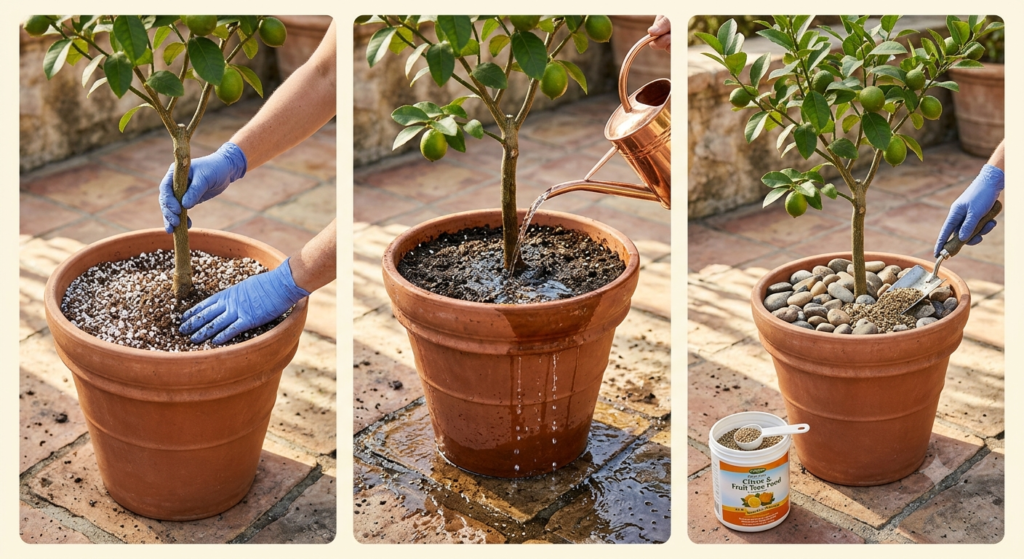
1Choose the Right Container & Soil Setup
Don’t use garden topsoil in pots
2.Plant the Tree Properly
Pay attention to the graft union
3.Establish a Smart Watering Routine
Potted trees dry out much faster than ground trees
Fertilize for Growth & Harvests
Nutrients leach out quickly with frequent watering
3 Quick Secrets to Fruit Tree Success
Don’t Plant Too Deep: When placing your sapling in the ground, make sure the graft union (the noticeable bulge on the lower trunk where the stem meets the root) stays at least 2 to 3 inches above the soil line. Burying it can cause the tree to rot or lose its dwarf qualities.
Water Deeply, Not Frequently: Fruit trees prefer deep soakings once or twice a week rather than light daily sprayings. Deep watering encourages roots to dig low, making the tree far more drought-resilient.
Pinch Off Fruit in Year One: It hurts to do it, but if your newly planted baby tree tries to set a bunch of fruit in its first spring, strip them off! You want the young tree putting its energy into building a strong root system first—the massive harvests will follow in years two and three.
Watch for Pests Early : Inspect leaves, stems, and young fruits regularly. Early detection makes pest management much easier.
Common Mistakes to Avoid
- Choosing a tree unsuitable for your climate
- Planting too close to walls or buildings
- Ignoring drainage
- Overwatering
- Using a container that is too small
- Skipping pruning completely
- Expecting a large harvest from a young tree
- Buying unnamed varieties from unreliable seller
ALSO READ”importance-of-growing-fruit-and-vegetables-at-home”
2. “7-benefits-of-growing-your-own-fruits-and-vegetables”
Final Thoughts to Start Fruit trees for Home Garden
Choosing the best fruit trees for a home garden is not simply about selecting the fruit you love most. It is about finding a tree that matches your space, sunlight, climate, soil, and gardening experience.
For beginners, guava, lemon, pomegranate, fig, and papaya are excellent starting points. If you have more room, mango, mulberry, amla, or citrus trees can become beautiful long-term additions to your garden.
Start with one suitable tree, care for it consistently, and enjoy the process. There is nothing quite like watching a small sapling become a productive part of your home garden.
Frequently Asked Questions
1. What is the best fruit tree for a beginner?
Guava, lemon, pomegranate, and fig are generally good beginner-friendly choices because they are manageable and adaptable when grown in suitable conditions.
2. Which fruit trees can grow in pots?
Lemon, fig, pomegranate, mandarin, lime, and dwarf guava can grow well in large containers with proper care.
3. How much sunlight do fruit trees need?
Most fruit trees need approximately 6–8 hours of direct sunlight daily for healthy growth and fruit production.
4. What is the fastest fruit tree to grow at home?
Papaya is one of the fastest fruit-producing plants for warm climates. Mulberry and guava can also grow relatively quickly under favorable conditions.
5. Can mango trees grow in small gardens?
Yes, but standard mango trees require considerable space. Dwarf or grafted mango varieties are more suitable for smaller gardens.
6. How long does it take for fruit trees to produce fruit?
The time varies by species and whether the plant is grown from seed or purchased as a grafted sapling. Grafted trees often fruit earlier than seed-grown trees.