
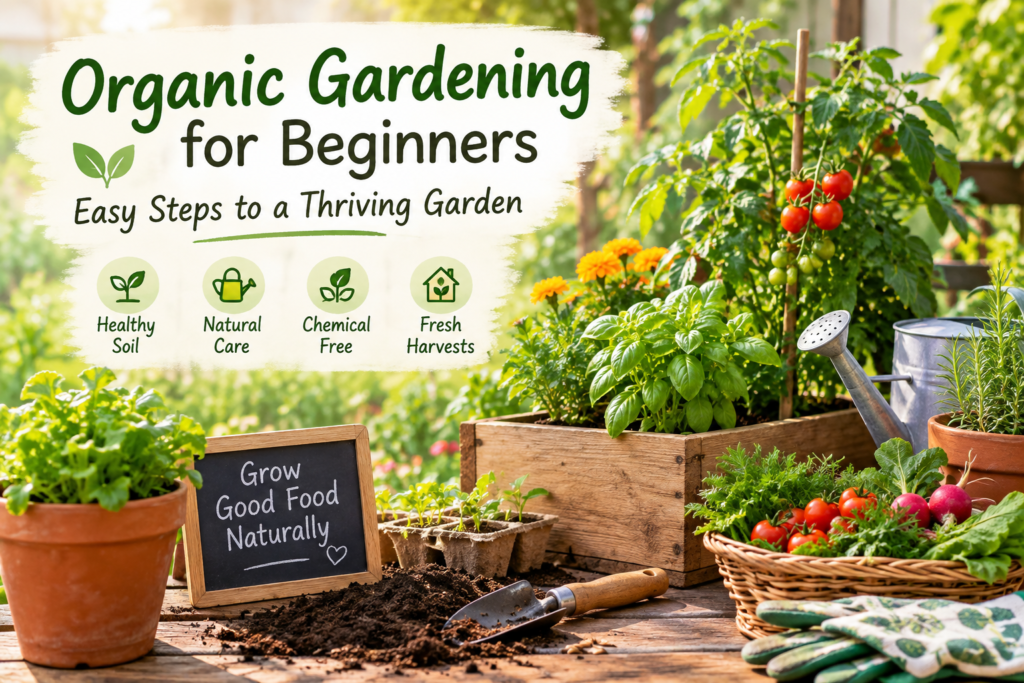
Ready to grow your own food without harsh chemicals? Learn organic gardening for beginners with this easy step-by-step guide to soil, plants, and natural pest control.
There is something deeply satisfying about picking a sun-warmed tomato from your own yard, wiping off a smudge of dirt, and taking a bite.
No synthetic sprays, no mister-coated supermarket displays—just pure, real flavor.If you’ve been wanting to start your own plot but feel overwhelmed by conflicting advice online, take a deep breath.
You don’t need a degree in botany or a massive backyard to make this work. Organic gardening boils down to one simple idea: working with nature instead of trying to control it.
Here is how to set up your first organic garden step by step, build healthy soil, and harvest fresh produce without using harsh synthetic chemicals.
Internal Link–READ. “essential-guide-to-sustainable-living-green-harvest-guide”
What Is Organic Gardening?
Organic gardening is a way of growing plants while avoiding or minimizing synthetic chemical fertilizers and pesticides.
Instead, organic gardeners focus on improving soil naturally and encouraging a healthy garden ecosystem. This can include using compost, organic matter, natural pest-control methods, crop rotation, mulching, and beneficial insects.
The basic idea is simple:
Healthy soil → healthy plants → a healthier garden.
Organic gardening isn’t about spending a lot of money on special products. In fact, many useful materials can come from your own kitchen and garden.
Fruit and vegetable peels, dried leaves, grass clippings, and other suitable organic materials can become valuable compost.
EXTERNAL Link-Organic farming by Wikipedia
Why Try Organic Gardening?
There are plenty of reasons to start an organic garden.
1. You Know What Goes Into Your Garden
When you grow vegetables, herbs, or fruits yourself, you have much greater control over how they are grown.
You decide what fertilizers and pest-control methods to use.
For many home gardeners, this is one of the biggest attractions of growing food at home.
2. It Helps Improve Soil Health
Healthy soil is the foundation of a productive garden.Organic matter such as compost helps improve soil structure and supports beneficial microorganisms. Over time, this can create a more active and productive growing environment for plants.
3. It Encourages Biodiversity
An organic garden can become a small ecosystem.
Flowers can attract bees and other pollinators. Certain plants can provide shelter for beneficial insects, while healthy soil supports a wide variety of organisms.
You aren’t just growing vegetables—you are creating a little piece of nature.
4. It Can Reduce Garden Waste
Instead of throwing every vegetable peel or pile of dry leaves into the trash, some organic materials can be turned into compost.
This creates a useful cycle:
Kitchen and garden waste → compost → healthier soil → better plants.
5. Gardening Can Be Enjoyable
Let’s not forget the simplest benefit: gardening is fun.
There is something relaxing about watering plants, watching new leaves appear, harvesting fresh herbs, or picking your first homegrown tomato.
You don’t have to turn your garden into a serious project. Start small and enjoy the process.
How to Start an Organic Garden
1. Choose the Right Location
Most vegetables and herbs need plenty of sunlight.
Before buying seeds or pots, look around your home and identify the areas that receive several hours of direct sunlight.
A sunny balcony, terrace, backyard, or garden bed can work well.
If you are growing indoors, choose plants that can tolerate the amount of natural light available.
Beginner tip: Don’t choose your plants first and then search for a suitable location. Check your available sunlight first.
2. Start With Easy Plants
One common beginner mistake is trying to grow everything at once.Instead, start with a few plants that are relatively easy to manage.
Depending on your climate and growing conditions, you could consider:
- Mint
- Coriander
- Basil
- Fenugreek
- Spinach
- Radishes
- Green beans
- Lettuce
- Chillies
- Tomatoes
Choose plants that suit your local climate and the amount of sunlight your garden receives.
3. Build Healthy Soil
Good soil can make gardening much easier.Rather than relying entirely on synthetic fertilizers, organic gardeners can improve soil with materials such as:
Well-made compost
Vermicompost
Aged manure
Leaf compost
Organic mulch
Compost adds organic matter and can improve the soil’s ability to hold moisture and support plant growth.
However, remember that more compost isn’t always better. Use suitable, well-decomposed compost in reasonable amounts.
4. Make Your Own Compost
Composting is one of the most useful skills for an organic gardener.
You can compost many common organic materials, including:
Fruit and vegetable scraps
Dry leavesGrass clippings
Coffee grounds
Certain plant trimmings
Avoid putting meat, dairy products, oily foods, or diseased plant material into a simple home compost system unless your specific composting method is designed to handle them.
A successful compost pile needs a good balance of materials, moisture, and air.
Don’t expect compost to be ready overnight. Like gardening itself, composting rewards patience.
5. Water Wisely
New gardeners sometimes believe that more water means healthier plants.
Unfortunately, that isn’t always true.Overwatering can cause problems such as root damage and fungal issues, while underwatering can leave plants stressed.Check the soil before watering. If the surface is dry, feel the soil a little deeper.
The watering requirement depends on the plant, container, soil, weather, and growing conditions.Water slowly and deeply when appropriate rather than constantly giving plants tiny amounts.
Morning is often a convenient time to water because it allows excess moisture on plant surfaces to dry during the day.
6. Use Mulch
Mulching is an easy technique that can make a noticeable difference.
Organic materials such as dry leaves, straw, or suitable compost can be used as mulch around plants.
Mulch can help:
- Reduce moisture loss
- Suppress some weeds
- Protect the soil surface
- Add organic matter as it breaks down
Don’t pile mulch directly against plant stems. Leave a little space around the base of the plant.
Natural Ways to Manage Garden Pests
Seeing holes in your beautiful leaves can be frustrating.Your first reaction might be to reach for a pesticide, but organic gardening encourages you to look at the bigger picture first.
Inspect Plants Regularly
Spend a few minutes checking your plants every couple of days.
Look underneath leaves and around new growth. Early detection can make pest problems much easier to manage.
Encourage Beneficial Insects
Not every insect in your garden is a pest.
Ladybirds, lacewings, bees, butterflies, and other beneficial organisms can play useful roles in the garden.
Growing a variety of flowering plants can help create a more welcoming environment for pollinators and beneficial insects.
Remove Some Pests by Hand
For small gardens, simply removing larger insects or damaged leaves can sometimes be enough to prevent a minor problem from becoming a major infestation.
Wear gardening gloves when appropriate.
Keep Plants Healthy
Healthy plants are generally better able to cope with environmental stress.
Give plants appropriate sunlight, water, nutrition, spacing, and airflow.
Sometimes the best pest-control strategy begins with good gardening practices rather than a pest-control product.
Internal Link READ “what-are-5-common-gardening-mistakes-beginners-should-avoid”
Common Organic Gardening Mistakes Beginners Make
Even experienced gardeners make mistakes.
The important thing is to learn from them.
Mistake 1: Planting Too Much Too Soon
Starting with twenty different vegetables may sound exciting.
A few weeks later, you may find yourself overwhelmed.
Start with three to five plants and learn how they behave.
Mistake 2: Overwatering
Plants need water, but roots also need oxygen.
Always consider the plant and soil before watering.
Mistake 3: Ignoring Sunlight
A plant that requires full sun may struggle in a dark corner.
Understand the light requirements of each plant before choosing its location.
Mistake 4: Using Too Much Fertilizer
Organic doesn’t automatically mean unlimited.
Too much fertilizer or manure can damage plants and disturb soil balance.
Follow the recommended application rates for the product you use.
Mistake 5: Expecting Instant Results
Gardening teaches patience.
Seeds take time to germinate. Plants take time to grow. Compost takes time to mature.
Don’t dig up your seeds every two days to check whether they’re growing!
Give them the right conditions and allow nature to do its work.
Organic Gardening in Small Spaces
You don’t need a large garden to grow plants.
For Example:
Container gardening is an excellent option for people living in apartments or cities.
You can grow herbs and some vegetables in:
- Pots
- Grow bags
- Wooden planters
- Recycled containers with drainage holes
- Balcony planters
Make sure containers have adequate drainage and are large enough for the plant you want to grow.
For beginners, herbs are particularly rewarding because they often require less space and can be harvested regularly.
A Simple Organic Gardening Routine
You don’t need to spend hours in the garden every day.
A simple routine might look like this:
Daily:
Check plants for obvious signs of wilting, pests, or unusual growth.
Every few days:
Check soil moisture and water when needed.
Weekly:
Remove weeds, inspect leaves, harvest mature herbs or vegetables, and check for pests.
Monthly:
Add suitable organic matter or compost according to the needs of your plants and growing medium.
The exact routine will depend on your plants, season, location, and growing method.
Start Small and Grow From There
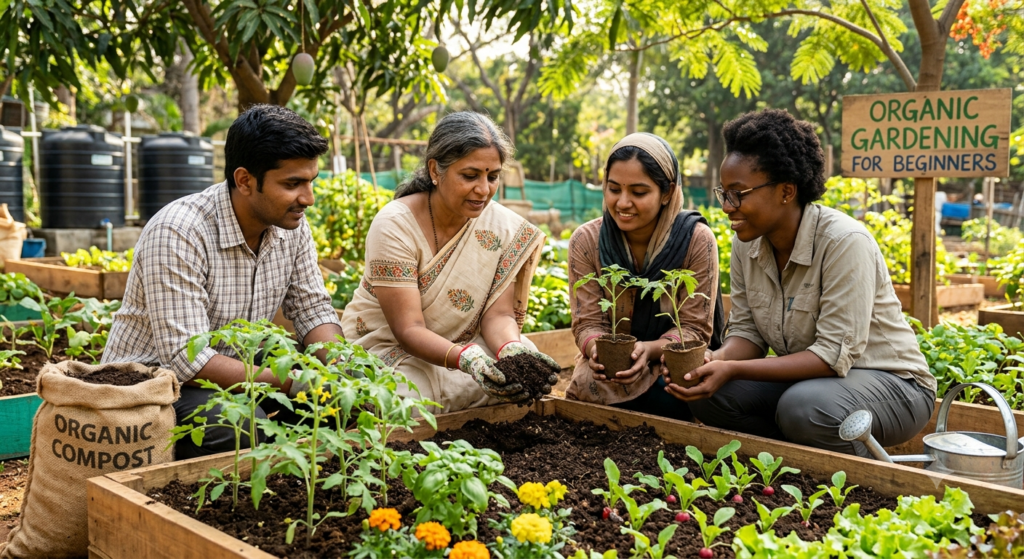
Organic gardening doesn’t require perfection.
Your first tomato plant might not produce much. Your coriander might bolt. Your first batch of compost might smell a little strange. And yes, something will probably eat a few of your leaves.
That’s gardening.
The goal isn’t to create a perfect garden immediately. The goal is to learn.
Start with a few easy plants. Improve your soil. Observe your garden. Try natural methods first. Keep notes about what works in your particular climate and growing conditions.
Over time, you’ll develop a better understanding of what your plants need.
And perhaps the best part is that every season gives you another chance to try something new.
Final Thoughts
Organic gardening for beginners can be simple, affordable, and rewarding when you start with the basics.
Focus on healthy soil, suitable plants, proper sunlight, sensible watering, compost, and natural pest-management practices. You don’t need expensive equipment or a huge backyard.
Even a few pots on a balcony can be the beginning of your own little garden.
So choose a sunny spot, pick a few beginner-friendly plants, get your hands into the soil, and start growing.
Your first little green shoot may be closer than you think.
Frequently Asked Questions
Is organic gardening difficult for beginners?
No. Beginners can start with a few easy plants in containers or a small garden bed. The key is to learn basic requirements such as sunlight, watering, soil, and plant spacing.
What is the best soil for organic gardening?
Healthy, well-draining soil containing organic matter is a good starting point. Compost and other suitable organic materials can help improve soil structure and fertility.
Can I do organic gardening in pots?
Yes. Container gardening works very well for herbs and many vegetables. Choose an appropriate container, use a suitable growing medium, and make sure the container has drainage holes.
What organic fertilizer is good for beginners?
Well-made compost and vermicompost are commonly used organic soil amendments. The right choice depends on the plant and growing medium, so avoid applying excessive amounts.
How can I control pests organically?
Start by regularly inspecting plants, removing pests manually when practical, encouraging beneficial insects, maintaining good airflow, and keeping plants healthy. The appropriate approach depends on the specific pest.
Is organic gardening more expensive than regular gardening?
It can be cheaper over time. While buying initial organic compost costs a bit upfront, you save long-term by making your own compost, saving seeds, and eliminating chemical sprays.