
There is a unique magic in watching a tiny green sprout push through the soil. You buy the cute terracotta pots, grab a bag of soil, water your plant like it’s your newborn child, and wait for your backyard or balcony to transform into a lush oasis.
Then, two weeks later, your plant looks like it’s going through a dramatic mid-life crisis. The leaves are yellow, the stems are drooping, and you’re left wondering if you were simply born without a green thumb.
Here is the secret seasoned gardeners rarely tell you up front: nobody is born with a green thumb. A green thumb is just a collection of dead plants you learned lessons from.
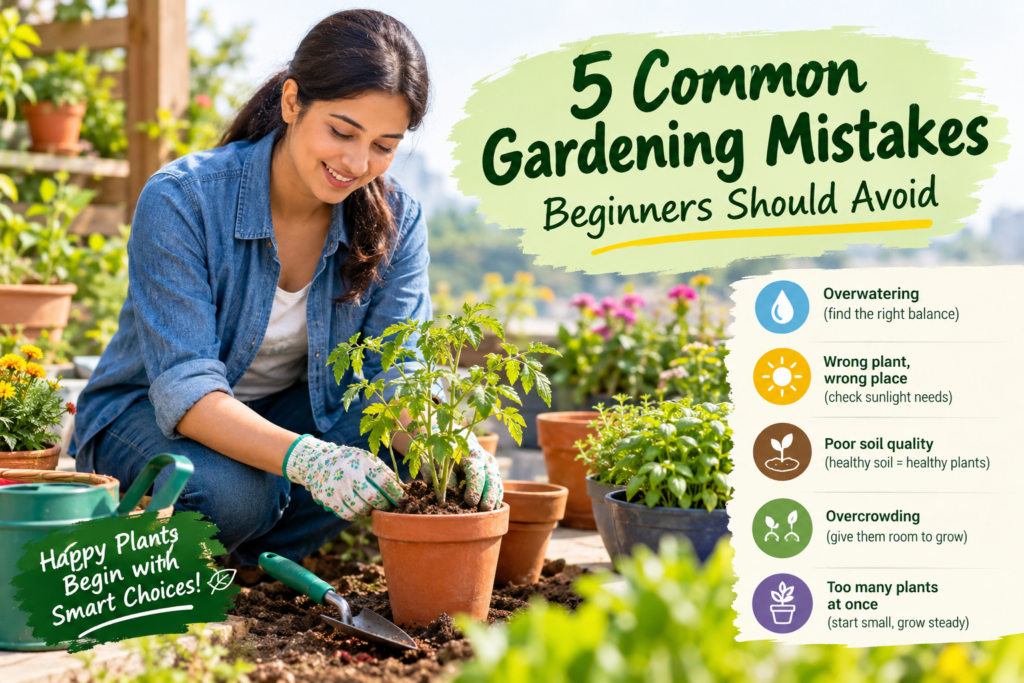
To help you skip the heartbreak, here are 5 common gardening mistakes beginners should avoid, along with simple fixes to get your plants thriving.
1. Drowning Your Plants with “Too Much Love” (Overwatering)
Overwatering is the undisputed top cause of premature plant death. When we see a struggling plant, our default instinct is to pour water on it. However, plant roots need oxygen just as much as they need moisture. Constantly soggy soil suffocates the roots, leading to root rot—a silent killer that turns stems mushy and leaves yellow.
The Fix: Ditch the strict calendar schedule. Before grabbing the watering can, use the finger test. Poke your index finger about 1–2 inches into the soil. If it feels dry and cool, it’s time to water. If soil clings to your finger and feels damp, hold off. Always ensure your pots have proper drainage holes so excess water can escape.
2.Ignoring Soil Quality
Scooping up random dirt from your backyard or buying the cheapest bag of topsoil might seem economical, but dirty soil leads to weak plants. Garden soil is often too dense for containers, compacting over time into a brick-like texture that restricts root growth and blocks drainage.
The Fix: Invest in high-quality potting mix for container plants. Good potting mix is fluffy, well-draining, and rich in organic matter like coconut coir or peat moss. If you’re planting directly in ground beds, mix in plenty of compost or organic manure to give your plants the nutrients they need to build strong root networks.
3. Misjudging Sunlight Requirements
Plants are notoriously picky about their lighting conditions. Placing a sun-loving tomato plant on a shady windowsill will leave it stretched out, thin, and unproductive. Conversely, baking a shade-tolerant fern under harsh direct sunlight will scorch its leaves.
- The Fix: Map your sunlight before you buy plants. Spend a day tracking how light moves across your garden or balcony:
- Full Sun: 6+ hours of direct sunlight daily.
- Partial Sun/Shade: 3 to 6 hours of light daily.
- Bright Indirect Light: Lots of light, but no direct sun rays touching the foliage.
Match the plant’s plant tag tag requirements to your space’s actual light conditions—not where you think the pot looks prettiest.
4. Overcrowding Plants (The “Instant Jungle” Trap)
When seedlings are small, it’s tempting to plant them close together so the garden looks full right away. But plants grow! Overcrowding causes them to fight for nutrients, water, and root space. Worse, lack of airflow between tightly packed leaves creates the perfect breeding ground for pests and fungal diseases.
The Fix: Respect mature size dimensions. Read the seed packet or plant label to see how wide the plant will get. If you’re starting from seed, practice “thinning”—plucking out weaker seedlings so the strongest ones have space to spread out.
5. Starting Too Big, Too Soon
It’s easy to get over-enthusiastic, buy 30 different plant varieties, and build a massive garden bed over a single weekend. But a large garden requires significant time for weeding, watering, pruning, and pest management. Beginners who take on too much often end up overwhelmed and ready to give up.
The Fix: Start small and scale up. Begin with 2 to 4 easy-to-grow plants—like basil, mint, marigolds, or radishes—in small pots or a modest raised bed.
Master their daily rhythms first. Once you feel confident keeping those alive, expand your green space step by step.
Bonus Tip: Don’t Expect Every Plant to Survive
Here’s something every beginner gardener should hear:
Plant failure doesn’t mean you’re a bad gardener.
Plant failure doesn’t mean you’re a bad gardener.
Sometimes plants die because of unsuitable weather, pests, disease, poor-quality seeds or conditions beyond your control.
Even experienced gardeners lose plants.Instead of seeing a failed plant as a disaster, treat it as a lesson.
Ask yourself:
- Was it getting enough sunlight?
- Was I watering too much or too little?
- Was the soil suitable?
- Did the plant have enough space?
- Was the weather appropriate?
- Were pests involved?Gardening is partly about observational
Gardening is partly about observation.
The more you observe, the better you become.
A Simple Beginner Gardening Checklist
Before planting something new, take a few minutes to check these five things:
☑ Sunli4ght: How much does the plant need?☑ Water: How often should it be watered?
☑ Soil: Does it require any special soil condition
☑ Space: How large will the plant eventually become?
☑ Climate: Is it suitable for your local growing conditions?
These simple questions can prevent many common gardening mistakes.
INTERNAL LINK- READ MORE “7 Benefits of growing fruits and vegetables at home
2. 10 Easy Herbs You Can Grow in Pots at Home
Final Thoughts
External Link–READ “Beginner Gardener? Avoid These Common Mistakes”
Avoiding these five common gardening mistakes —overwatering, choosing the wrong location, ignoring soil quality, overcrowding plants and taking on too much at once—can give your garden a much better start. And remember, gardening isn’t about getting everything perfect. Sometimes a yellow leaf teaches you more than a perfect harvest. So grab your gardening tools, get your hands a little dirty and enjoy the process. Your garden will grow—and so will your gardening skills. 🌿 Gardening is a journey of trial, error, and patience. Losing a plant isn’t a failure—it’s just data! By avoiding these five common mistakes, you give your garden the best possible chance to flourish. Grab your gloves, check your soil, and get growing!
Frequently Asked Questions (FAQ)
Q1: What are the best plants for absolute beginners to start with?
A: Herbs like basil, mint, and rosemary, along with sturdy vegetables like radishes and cherry tomatoes, are great starting choices. For indoors, snake plants, pothos, and ZZ plants are extremely forgiving.
Q2: How often should I fertilize my new plants?
A: Less is more. Most potting soils come with initial nutrients built-in. Generally, feeding your plants once every 2–4 weeks during their active growing season (spring and summer) with a balanced liquid fertilizer is plenty. Avoid fertilizing dormant plants in winter.
Q3: How do I know if my plant is getting too much or too little light?
Plants getting too little light will become “leggy” (tall, thin, and stretching toward windows) with pale green leaves. Plants getting too much light will often develop dry brown patches, crispy edges, or faded leaf colors.
Q4. How much space should I leave between plants?
Plant spacing depends on the species and its mature size. Check the seed packet or plant label for recommended spacing rather than judging by the size of a young plant.
Q5. Is gardening difficult for beginners?
Gardening can have a learning curve, but it doesn’t have to be difficult. Starting with easy-to-grow plants and learning from small mistakes can make the experience much more enjoyable.