
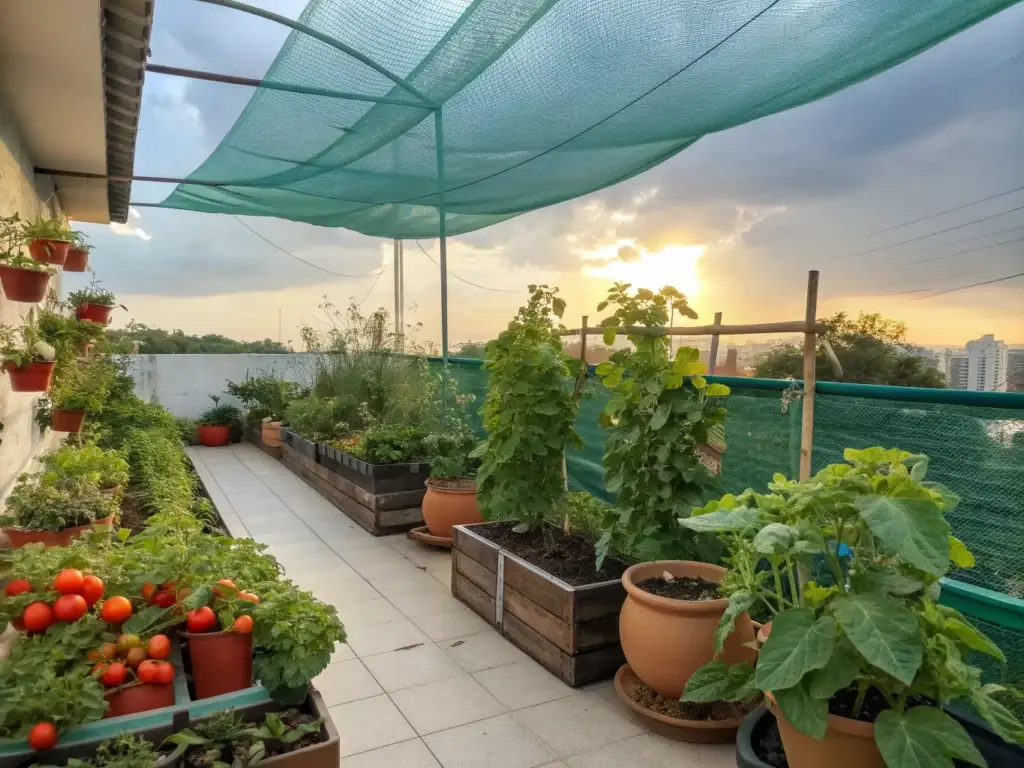
There is a unique kind of joy in plucking fresh, crisp bhindi (okra) or juicy tamatar (tomatoes) right off your own roof. No chemical sprays, no sky-high prices—just pure, organic goodness straight to your kitchen table.
If you’ve been gazing up at your empty rooftop thinking, “Can I actually turn this hot concrete slab into a green haven?”—the answer is a resounding YES.
However, terrace gardening in India isn’t quite the same as gardening in mild European weather. We deal with brutal 45^\circ\text{C} summer heatwaves and torrents of relentless monsoon rains. But don’t worry! With a little smart planning, your terrace garden will thrive all year round.
Let’s step through everything you need to know to set up your green paradise from scratch.
Step 1: Prep the Terrace (Waterproofing & Weight Matters)
Before buying a single bag of soil, let’s talk safety and house rules.
Check Waterproofing: The last thing you want is damp spots on your top-floor ceiling. Ensure your terrace floor is properly coated with a damp-proof solution or tiled properly.
Elevate Your Pots: Never place grow bags or pots directly on the flat concrete floor. Water gets trapped underneath, creating mold and dampness. Use pot stands or cheap brick supports to keep containers at least 2 to 3 inches off the ground.
Mind the Load: Standard house terraces easily handle the weight of containers, but use lightweight materials like coco-peat instead of heavy red soil to keep things safe and manageable.
Step 2: The Magic Potting Mix Recipe
Ordinary soil turns hard as a rock under the blazing Indian sun and turns into slush during the monsoons. In Terrace You need a soil mix that retains moisture in June, yet drains freely in August.
Here is the ultimate 1:1:1 Potting Mix Formula for Indian rooftop gardens:
Garden Soil / Topsoil1 PartGives plants weight, stability, and natural minerals.Coco-Peat1 PartFluffs up the soil, keeping it lightweight and holding water during hot days.Compost (Vermicompost or Cow Dung)1 PartFeeds your vegetables naturally without synthetic fertilizers.
Pro-Tip:
Add a handful of Neem Cake powder (Neem Khali) and trichoderma powder to this mix. It acts as an organic shield, protecting roots from fungus and soil pests during humid months!
Step 3: Pick the Right Containers & Plants
Skip expensive marble pots. For terrace vegetable gardening, lightweight and durable options rule:
HDPE Grow Bags: Cheap, UV-resistant, and ideal for vegetables. Look for 200–300 GSM quality.
Plastic Buckets/Tubs: Drilled with drainage holes at the bottom.
What to Plant Season-by-Season
Summer Champions (Feb to May): Karela (Bitter Gourd), Lauki (Bottle Gourd), Torai (Ridge Gourd), Okra, Chilli, and Cluster Beans (Gawar).
Monsoon Champions (June to Sept): Tomatoes, Eggplant (Baingan), Cucumber, Pumpkin, Spinach (Palak), and Amaranth (Chaulai).
Summers can be ruthless. Without protection, your plants will scorch by noon. Here’s how to keep them cool:
Read More “The Importance of Growing Fruit and Vegetables at Home”
1. Install a Shade Net for Terrace Garden.
Install a 50% Green Shade Net over your terrace. It filters out intense ultraviolet rays while allowing enough sunlight through for photosynthesis.
2. Mulch Like Your Garden Depends On It
Mulching is non-negotiable. Cover the top layer of soil around your plants with a 2-inch layer of dry leaves, rice straw, or coco-husk. This prevents moisture from evaporating instantly under direct sunlight.
3. Water Twice a Day
Water early in the morning (before 8 AM) and late in the evening (after 6 PM). Never water at noon, as the scalding water in the soil can literally cook your plant’s roots!
Step 5: Tackling the Monsoons (Drainage & Pest Control)
While the monsoon brings relief, excessive water brings two big enemies: root rot and fungal attacks.
Monsoon Checklist:
[ ] Clear all pot drainage holes using a thin wire or stick.
[ ] Move delicate seedlings under shade so heavy rain drops don’t snap them.
[ ] Spray Neem Oil solution once every 7 days to ward of
How to Make an Organic Neem Spray at Home:
Mix 5 ml of pure cold-pressed Neem Oil with 2-3 drops of liquid dish soap in 1 Liter of water.
Shake well until the water turns milky white.
Spray thoroughly on the undersides of leaves where pests love to hide!
Step 6: Feeding Your Garden Organically
Vegetables are hungry plants! Chemical fertilizers burn plants during summers, so stick to natural plant food every 15 days:
Liquid Compost Tea: Soak 1 kg of vermicompost or well-rotted cow manure in 5 Liters of water for 48 hours. Dilute it with water until it looks like light tea, then pour it over the soil.
Banana Peel Water: Soak banana peels in water for 3 days to create a potassium-rich drink that boosts flowering in tomatoes and chillies!
Read More–“20 Beautiful Terrace Garden Ideas for Outdoor Space”
FAQs (Frequently Asked Questions)
Q1. How many hours of sunlight are needed for a terrace vegetable garden?
Most fruiting vegetables (tomatoes, chillies, gourds) need at least 5 to 6 hours of direct sunlight daily. Leafy greens like spinach and coriander can manage with 3 to 4 hours.
Q2. Will a terrace garden cause water leakage into my roof?
Not if you use pot stands or elevated rubber saucers beneath your pots. Always leave clearance beneath containers so rainwater and excess drainage run straight down the drain without pooling.
Q3. How often should I fertilize my terrace vegetables?
Apply a hand of solid compost (vermicompost) every 25–30 days. For quick results, use a mild organic liquid fertilizer (like sea-weed extract or compost tea) every two weeks.
How to Set Up a Terrace Vegetable Garden in Indian Climates (Summer & Monsoon Special)
Ready to Pick Your First Harvest?
Setting up a terrace vegetable garden in India isn’t about creating a perfect Instagram setup on Day 1. Start small! Pick 2 or 3 easy plants like chillies, spinach, or mint, get a feel for how your terrace behaves through the seasons, and scale up from there.
Got questions about your specific rooftop setup? Drop a comment below, and let’s get growing together on GreenHarvestGuide.in!