
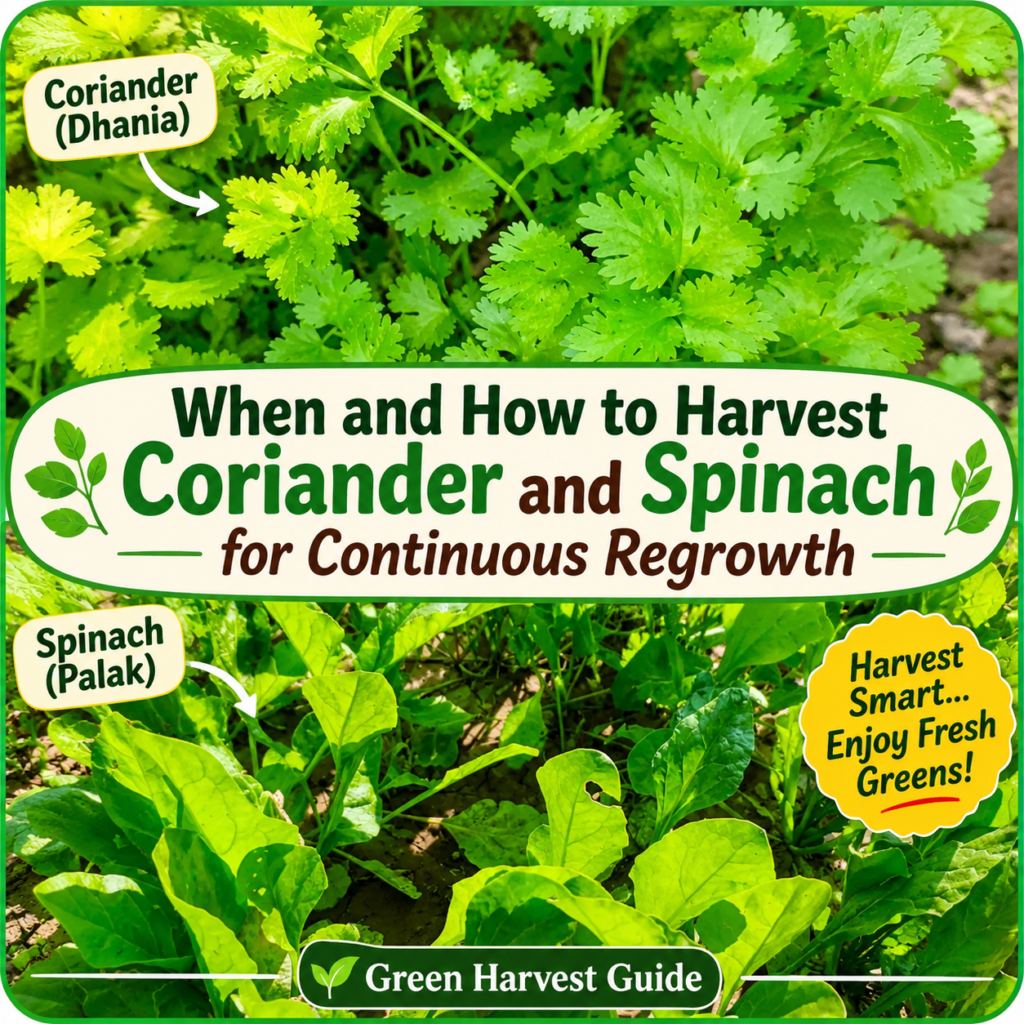
How to Harvest Coriander (Dhania) and Spinach (Palak)
Fresh coriander and spinach are two of the most useful vegetables to grow at home. Whether you have a small balcony garden, a terrace garden, or a few pots near a sunny window, these leafy greens can provide a regular supply of fresh, healthy leaves.
But here is something many beginner gardeners discover after their first harvest: cutting the leaves incorrectly can stop plants from growing properly.
Instead of pulling out the entire plant, you can harvest mature leaves while allowing the growing points to continue producing fresh growth.
In this guide, we will explore when to harvest coriander and spinach, how to cut their leaves correctly, and how to encourage continuous regrowth for a longer harvesting season.
1. Why Proper Harvesting Matters
Growing leafy vegetables is only half the job. Knowing when and how to harvest them is equally important.
If you remove too many leaves at once, damage the central growing point, or allow plants to become overcrowded, their growth may slow down.
Proper harvesting helps you:
- Encourage fresh leaf production.
- Extend the harvesting period.
- Avoid unnecessary damage to plants.
- Enjoy tender leaves with better flavour.
- Get more produce from a small garden space
The secret is simple: harvest mature outer leaves first and leave enough healthy foliage for the plant to continue growing.
2. When to Harvest Coriander (Dhania)
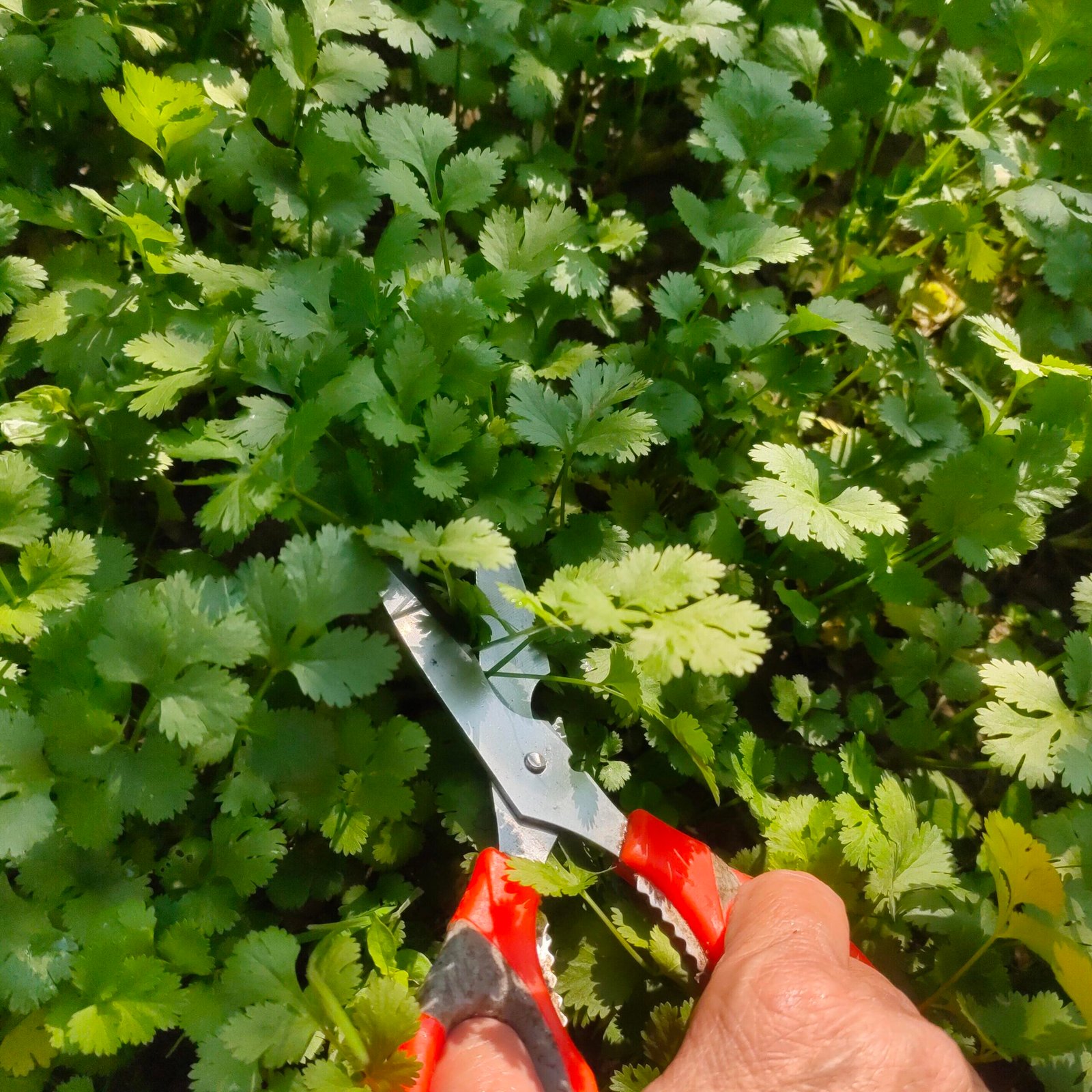
Coriander is a popular herb in Indian kitchens. Its fresh green leaves add flavour to chutneys, dals, curries, salads, and many everyday dishes.
Coriander grows relatively quickly from seeds. Under suitable conditions, you can usually begin harvesting leaves approximately 30–45 days after sowing.
However, the exact timing depends on the variety, weather, sunlight, and growing conditions.
Signs That Coriander Is Ready for Harvest
Look for these signs before cutting your coriander:
- Plants have reached approximately 10–15 cm in height.
- Several healthy, well-developed leaves have appeared.
- The stems are strong enough to support new growth.
- The plants look green and healthy.
Avoid harvesting very young seedlings. Give them enough time to establish a healthy root system.
How to Harvest Coriander Without Killing the Plant
Coriander has a delicate growing structure, so gentle harvesting is important.
Follow these steps:
Step 1: Select mature stems
- Choose the larger outer stems with fully developed leaves. Leave the smaller central shoots untouched
Step 2: Use clean scissors
Cut the selected stems approximately 2–3 cm above the soil surface, provided you are harvesting individual mature outer stems and leaving the central growing points intact.
Step 3: Avoid cutting everything together
ever remove all the leaves in one harvest. Take only a portion of the healthy foliage, leaving enough leaves for photosynthesis and further growth.
Step 4: Water after harvesting
If the soil is dry, water lightly after harvesting. Keep the soil moist but never waterlogged.
Step 5: Allow fresh growth
Give the plant time to recover before harvesting again. New growth may appear within several days under favourable conditions.
An Important Tip for Continuous Coriander Harvesting
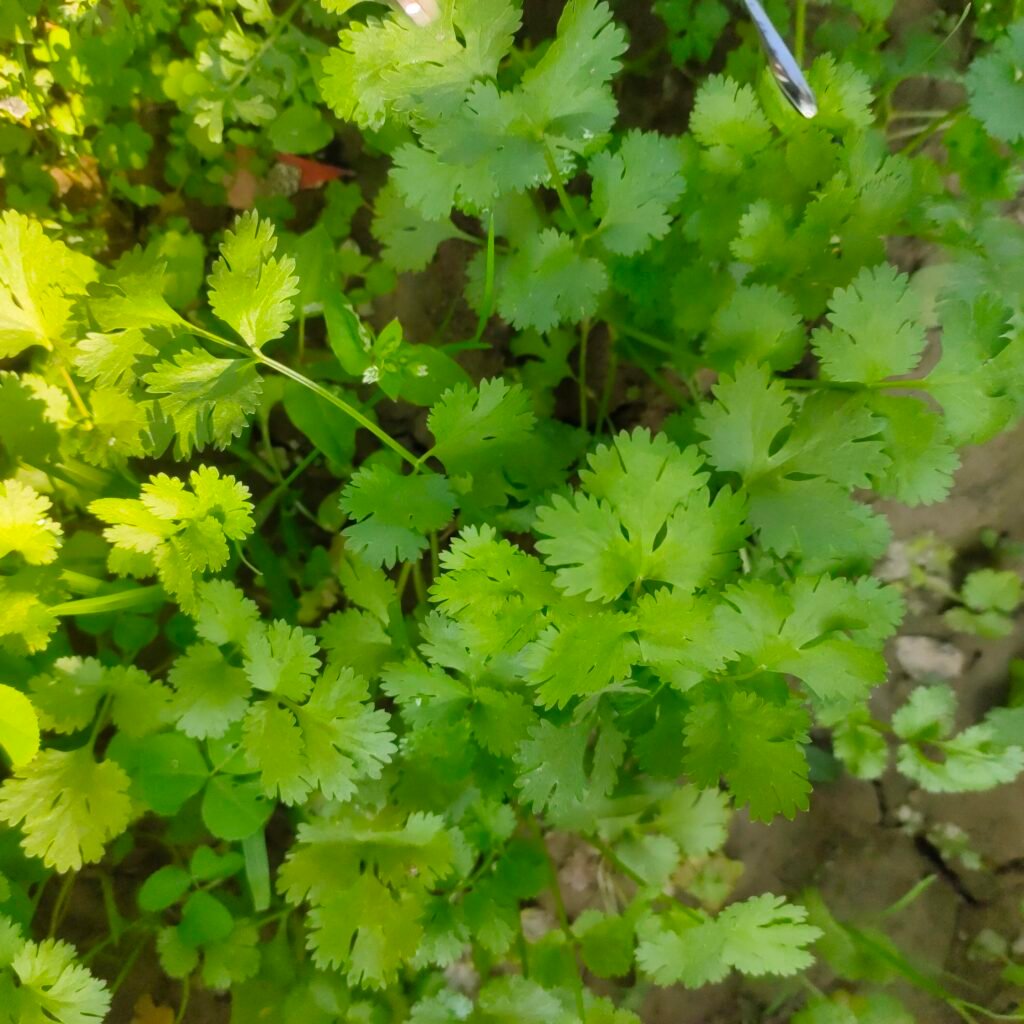
Coriander naturally tends to produce flowers and seeds as it matures, particularly during warm weather or when plants experience stress.
Once flowering begins, leaf production generally declines.For a continuous supply, sow a small batch of coriander seeds every 2–3 weeks instead of planting everything at once.This method, called succession sowing, helps ensure that young plants are always growing while older plants are being harvested.
3. When to Harvest Spinach (Palak)
Spinach is another excellent choice for home gardening. It grows well in containers, raised beds, and kitchen gardens.
In suitable conditions, spinach leaves can often be harvested approximately 30–40 days after sowing, although some varieties may take longer.
The best time to harvest is when the leaves are large enough to use but still tender and fresh.
Signs That Spinach Is Ready for Harvest
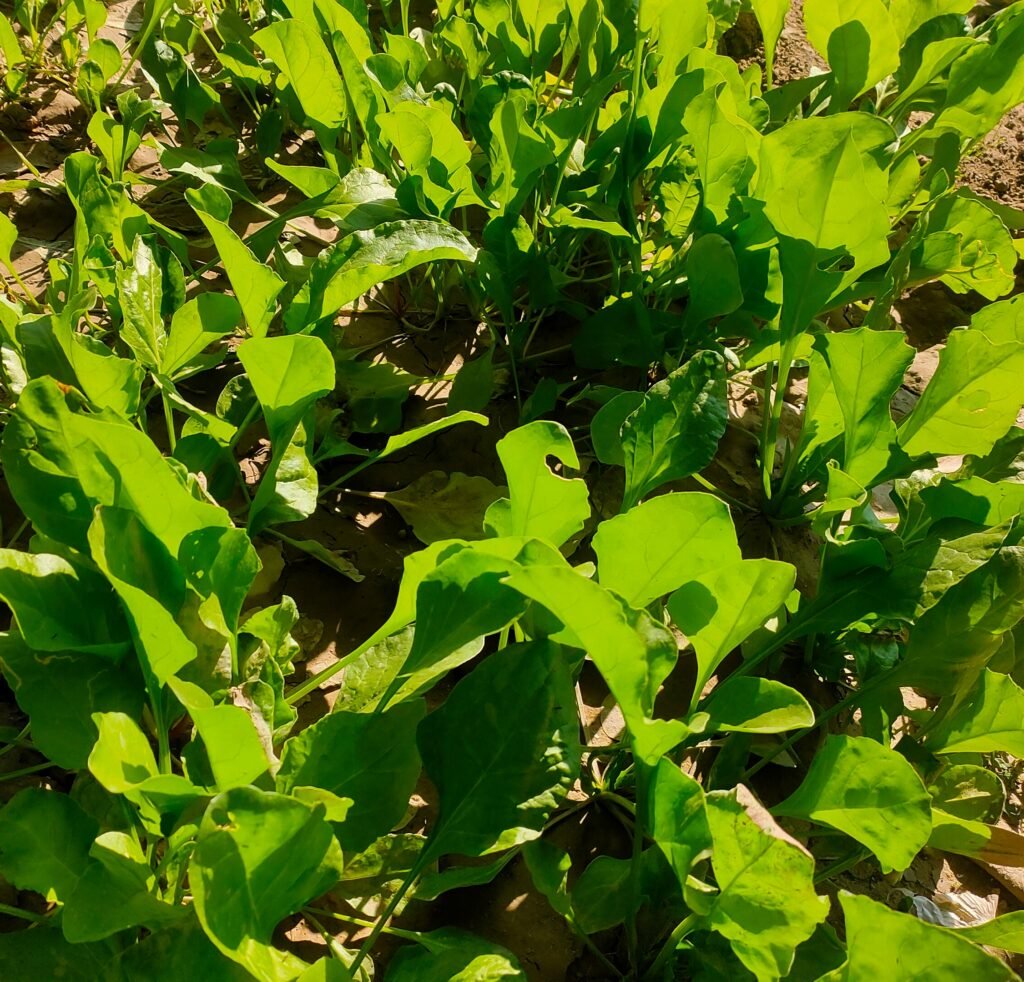
- The leaves are approximately 8–12 cm long.
- The plants have developed several healthy leaves.
- The leaves look fresh, green, and firm.
- The plants have established a healthy central growing point.
How to Harvest Spinach for Continuous Regrowth
Spinach is particularly suitable for repeated harvesting if you protect its central growing point.
Step 1: Identify the outer leaves
Look for the largest, oldest leaves around the outside of the plant.
Step 2: Cut individual leaves
Use clean scissors to cut the outer leaves close to their base without damaging the crown or central growing point.
Step 3: Leave the centre untouched
The small, newly emerging leaves in the middle are responsible for continued growth. Never cut them during routine harvesting.
Step 4: Avoid excessive harvesting
Remove only about one-third of the mature foliage at a time. Leave sufficient healthy leaves on the plant.
Step 5: Give the plant time to recover
Allow new leaves to develop before harvesting again. Depending on weather and plant health, you may be able to harvest every 5–7 days.
4. Best Time of Day to Harvest Dhania and Palak
The time of harvesting can make a difference to the freshness and quality of leafy vegetables.
Early morning is generally the best time to harvest coriander and spinach
Why?
- Plants are usually well hydrated after the cooler night.
- Leaves are often crisp and fresh.
- Cooler temperatures reduce moisture loss after cutting.
- Freshly harvested leaves are easier to store.
- Avoid harvesting during the hot afternoon, especially in summer.
If the leaves are wet from rain or heavy dew, allow them to dry before harvesting to reduce the risk of spoilage during storage.
5. How to Encourage Continuous Regrowth
Good harvesting practices alone are not enough. Your plants also need proper care to produce fresh leaves repeatedly.
Here are some simple tips.
A. Provide Adequate Sunlight
Coriander generally grows well with around 3–5 hours of sunlight or bright light, while spinach benefits from approximately 4–6 hours of sunlight in cooler weather.
During hot Indian summers, afternoon shade can help protect both crops from heat stress.
B. Maintain Consistent Soil Moisture
Both crops prefer evenly moist soil.
Check the top layer of soil regularly. If it feels dry, water gently.Avoid overwatering because waterlogged soil can cause root problems
.C. Feed Plants Naturally
Leafy vegetables benefit from nutrient-rich soil.
Before planting, mix well-rotted compost or vermicompost into the growing medium.You can also apply a small quantity of mature compost around established plants every few weeks.Avoid applying fresh manure directly to growing plants.
D. Remove Yellow and Damaged Leaves
Old, yellow, or damaged leaves should be removed carefully.This keeps the plants tidy and allows you to identify healthy new growth.
E. Avoid Overcrowding
Crowded plants compete for light, water, and nutrients.
Thin seedlings when necessary, following the spacing recommendations for your seed variety.
Good air circulation also helps reduce fungal problems.
6. Growing Coriander and Spinach in Containers
You do not need a large garden to grow these two leafy vegetables.
A balcony or terrace with suitable sunlight is enough.
For coriander:
- Choose a container at least 15–20 cm deep.
- Use a pot with drainage holes.
- Sow seeds in loose, well-draining potting soil.
- Keep the soil consistently moist during germination.
For spinach:
- Choose a container approximately 20–25 cm deep.
- Use a wide pot or rectangular planter.
- Provide nutrient-rich, well-draining soil.
- Maintain adequate spacing between plants.
A mixture of garden soil, compost, and cocopeat can work well when prepared in suitable proportions.
Remember that container plants dry out faster than plants growing in garden beds, so check soil moisture regularly.
How to Store Freshly Harvested Coriander and Spinach
Once harvested, proper storage helps keep your leafy greens fresh.
For coriander:
Remove damaged or yellow leaves.Keep the leaves dry if you plan to store them.Wrap them loosely in a clean paper towel.Place them in a breathable or loosely closed container in the refrigerator.
For spinach:
Remove damaged leaves and visible dirt.
Avoid storing wet leaves.
Imagine stepping onto your balcony in the morning, picking a handful of fresh coriander for your chutney and a few spinach leaves for your breakfast.Wrap them in a clean, dry paper towel.
Keep them in the refrigerator in a suitable storage container.
Wash both vegetables thoroughly under clean running water before use.
Enjoy a Continuous Supply of Fresh Greens at Home
Imagine stepping onto your balcony in the morning, picking a handful of fresh coriander for your chutney and a few spinach leaves for your breakfast.
It is one of the simplest pleasures of home gardening.
The trick is not to harvest everything at once. Pick mature leaves carefully, protect the growing points, provide adequate sunlight, and maintain consistent soil moisture.
For coriander, succession sowing is especially useful because the plants naturally move towards flowering as they mature. For spinach, repeated harvesting of outer leaves can encourage continued production while the central crown remains healthy.With a little patience and regular care, even a few containers can provide a rewarding supply of fresh leafy greens.Start small, harvest wisely, and let your garden grow again.
READ MORE–
Internal Link-“how-to-grow-10-herbs-in-pot-at-home/“
External Link -“https://en.wikipedia.org”
Conclusion
Coriander and spinach are among the easiest leafy vegetables to grow at home, but the right harvesting technique makes a big difference.
Harvest coriander by cutting selected mature stems while protecting young central shoots. Harvest spinach by removing mature outer leaves without damaging the central growing point.
Combine careful harvesting with good watering, compost, suitable sunlight, and regular sowing, and you can enjoy fresh dhania and palak for much longer.
Your home garden does not need to be large to be productive. Sometimes, two or three well-maintained containers are enough to bring fresh greens straight to your kitchen.
Frequently Asked Questions (FAQs)
1. How many days does coriander take before its first harvest?
Coriander generally becomes ready for its first leaf harvest within 30–45 days after sowing, depending on the variety and growing conditions.
2.How can I harvest coriander without killing the plant?
Cut selected mature outer stems with clean scissors while leaving young central shoots and enough healthy foliage. Avoid removing the entire plant.
3.How many times can spinach be harvested?
Spinach can provide several harvests when you remove mature outer leaves and protect the central growing point. The number of harvests depends on the variety, weather, and plant health.
4.Can spinach grow again after cutting?
Spinach can produce new leaves when you harvest individual outer leaves and leave the central crown undamaged.
5.Why is my coriander flowering too early?
High temperatures, long daylight hours, and moisture stress can encourage coriander to bolt (flower early). Grow it during cooler weather and sow fresh batches every 2–3 weeks.
6.Can I grow coriander and spinach together in one container?
It is possible in a sufficiently wide container, but separate containers are often better because they allow you to manage spacing, watering, and harvesting more easily.
7.Can coriander and spinach regrow from leftover roots?
yes you can grow coriander and spinach again with leftover roots . Keep them in water for a day or so then plant it in moist soil.
New leaves may appear within 7–14 days, depending on the freshness and condition of the roots.