
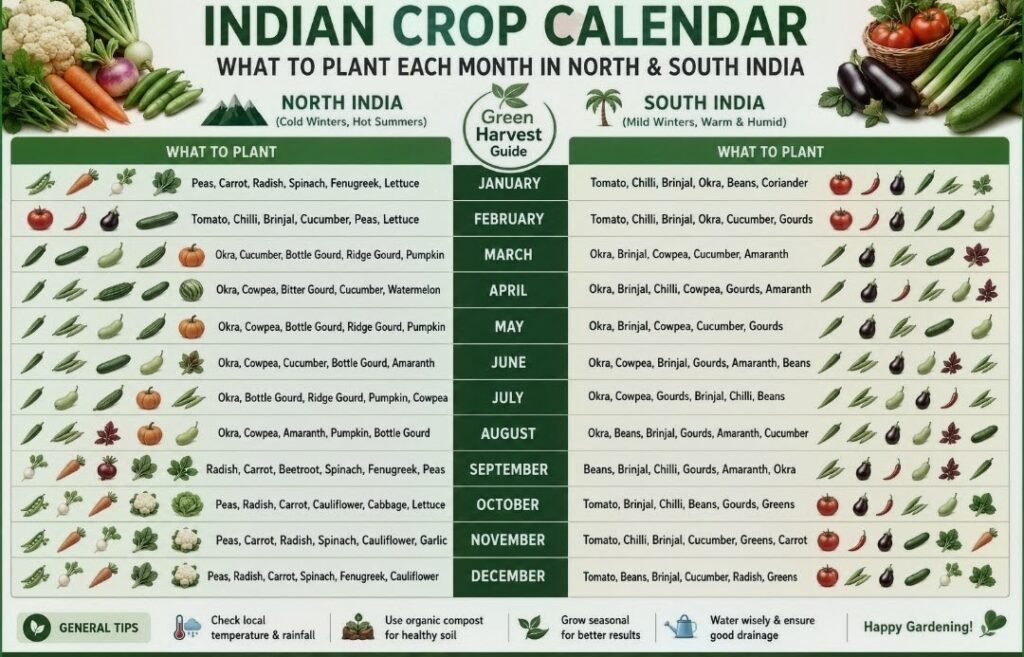
Ever stood in your garden in mid-July with a packet of spinach seeds, wondering why nothing is sprouting? You are not alone. Gardening and farming in India is equal parts art, science, and timing. Because India spans everything from the frosty plains of Punjab to the tropical coastlines of Tamil Nadu, a single planting calendar just doesn’t work for everyone.
Understanding the distinction between the North Indian climate (extreme summers and distinct freezing winters) and the South Indian climate (tropical, coastal, and mild year-round) is the secret to growing a thriving crop yield.
Why Does Planting Time Matter in India?
Plants have their favourite weather too!
Some vegetables love the cool days of winter, while others need warmth and sunshine. Certain crops also perform best when planted just before or after the monsoon.
India’s traditional agricultural calendar is broadly divided into:
Kharif season: Mainly linked with the monsoon, generally June to October.
Rabi season: The cooler season, generally October to March.
Zaid season: The warmer summer period, generally March to June.
ICAR identifies crops such as rice, maize, millets, pulses, soybean and groundnut with the Kharif season, while wheat, chickpea, mustard, peas and lentils are important Rabi crops. Summer crops include cucumber, watermelon, muskmelon, moong and short-duration vegetables.
For a home gardener, however, things are a little simpler: watch the weather, choose the right crop and plant at the right time.
Quick Indian Crop Calendar at a Glance
Month
North India
AND
South India
January
Peas, carrot, radish, spinach, methi
Tomato, chilli, brinjal, greens
February
Tomato, chilli, okra, cucumber
Tomato, chilli, okra, gourds
March
Okra, cucumber, gourds, melon
Okra, cowpea, brinjal, greens
April
Okra, gourds, cucumber, melon
Okra, brinjal, chilli, cowpea
May
Okra, cowpea, gourds
Okra, gourds, cowpea, greens
June
Okra, gourds, cowpea, amaranth
Okra, gourds, beans, greens
July
Okra, gourds, pumpkin, cowpea
Okra, gourds, brinjal, beans
August
Monsoon crops + winter preparation
Okra, beans, gourds, greens
September
Radish, carrot, spinach, peas
Beans, brinjal, chilli, greens
October
Peas, carrot, radish, cabbage
Tomato, beans, brinjal, greens
November
Peas, carrot, spinach, cauliflower
Tomato, chilli, beans, greens
December
Peas, radish, carrot, spinach
Tomato, beans, radish, greens
North vs South India: Why the Calendar Is Different
The biggest mistake a new gardener can make is assuming that one Indian planting calendar works everywhere.
North India generally experiences a more pronounced winter, while many parts of South India remain comparatively warm for much of the year.
That means vegetables such as peas, carrots, radishes and cauliflower are especially associated with the cool season in northern plains, while warm-season vegetables such as okra, brinjal and chilli can have longer growing windows in many southern areas.
Rainfall also matters.
For example, a gardener in Kerala may need to think about heavy monsoon rainfall and drainage, while someone in an interior dry region may be more concerned about irrigation.
READ MORE -“The Essential Green Harvest Guide: A Powerful Path to Sustainable Living”
5 Simple Rules for Using This Crop Calendar
1. Check Your Local Temperature
The month on the calendar is only a starting point.
If your winter arrives early, plant cool-season vegetables earlier. If temperatures remain high, wait.
2. Watch the Rain
Rain can completely change your gardening schedule.
During heavy monsoon periods, focus on drainage and avoid keeping plants in waterlogged soil.
3. Choose the Right Variety
The same vegetable can have varieties suited to different seasons and regions.
i car’s crop variety information includes examples of vegetables developed for particular regions and growing seasons, reinforcing the importance of selecting suitable varieties rather than relying only on the crop name.
4. Start Seeds at the Right Time
Some crops are best transplanted after raising seedlings, while others can be directly sown.
Tomato, chilli and brinjal, for example, are commonly started in nurseries before transplanting in suitable conditions.
5. Keep a Gardening Diary
This is one of my favourite tips for home gardeners.
Write down:
What I planted → When I planted it → How it grew → When I harvested it.
After one year, you’ll have your own personalised crop calendar for your garden.
READ MORE
Final Thought.
Gardening in India becomes much easier when you stop asking, “What vegetables should I grow?” and start asking, “What vegetables should I grow this month?”
The answer changes with the seasons.
In North India, winter can turn your garden into a beautiful sea of peas, carrots, spinach and radishes. As summer arrives, okra, gourds and cucumbers take over.
In South India, warmer temperatures can provide longer growing windows for many vegetables, while monsoon patterns play a particularly important role.
So don’t worry if your neighbour’s planting calendar doesn’t match yours.
Your garden has its own little climate. Learn to read it, and you’ll become a much better gardener.
Start small, plant according to your season, observe what happens—and enjoy the wonderful satisfaction of growing your own food.
Frequently Asked Questions
1. What vegetables can I grow throughout the year in India?
Depending on your region, vegetables such as chilli, brinjal, okra and several leafy greens can have relatively long growing windows. However, no single vegetable is guaranteed to grow well throughout the year in every part of India.
2. What should I plant in winter in North India?
Popular winter vegetables include peas, carrots, radishes, spinach, fenugreek, coriander, beetroot, turnip, cauliflower, cabbage and broccoli.
3. What vegetables grow well in South India?
Depending on the local climate, common choices include okra, brinjal, chilli, beans, tomato, cucumber, gourds and leafy vegetables.
4. Which month is best for planting vegetables in India?
- There is no single best month for every vegetable. October-November is excellent for many winter vegetables in North India, while warm-season vegetables can be planted during spring and monsoon windows depending on the region.
5. Can I follow the same crop calendar for Punjab and Kerala?
No. Punjab has much colder winters than Kerala, while Kerala has a tropical climate with different rainfall patterns. The planting calendar should be adapted to local conditions.
6. When should I plant tomatoes in North India?
Tomato planting depends on the local temperature and variety. In cooler northern areas, seedlings are often raised first and transplanted when temperatures become suitable. The exact timing varies by location.
7. What can I grow during the monsoon?
Okra, gourds, cowpea, amaranth and some beans can perform well during suitable monsoon conditions. Good drainage is particularly important.
8. Is this calendar suitable for terrace gardening?
Yes. Most of the vegetables mentioned can be adapted to containers, grow bags or raised beds. Just remember that container plants dry out faster and need suitable pot size, drainage and sunlight.