
Why Grow micro-greens and Herbs Indoors?
Before we get to the microgreens plants, let’s talk about why indoor growing is worth trying.
1. You Need Very Little Space
micro-greens and herbs don’t usually need a huge growing area. A windowsill, kitchen counter, balcony shelf or small corner near a bright window may be enough.
This makes them particularly useful for people living in apartments.
2. You Can Harvest Fresh Food
One of the biggest joys of growing herbs indoors is having fresh leaves available when you need them.Instead of buying a large bunch of coriander or mint and watching some of it wilt in the refrigerator, you can simply harvest what you need.
3. micro-greens Grow Quickly
micro-greens are young edible plants harvested when they are still small.Depending on the variety and growing conditions, many can be ready to harvest within a couple of weeks. That’s considerably faster than waiting for a mature vegetable plant.
4. Micro-green Gardening Can Fit into a City Lifestyle
You don’t need to spend hours looking after a small indoor garden.A few minutes spent checking moisture, providing suitable light and harvesting your plants can become an enjoyable part of your daily routine.
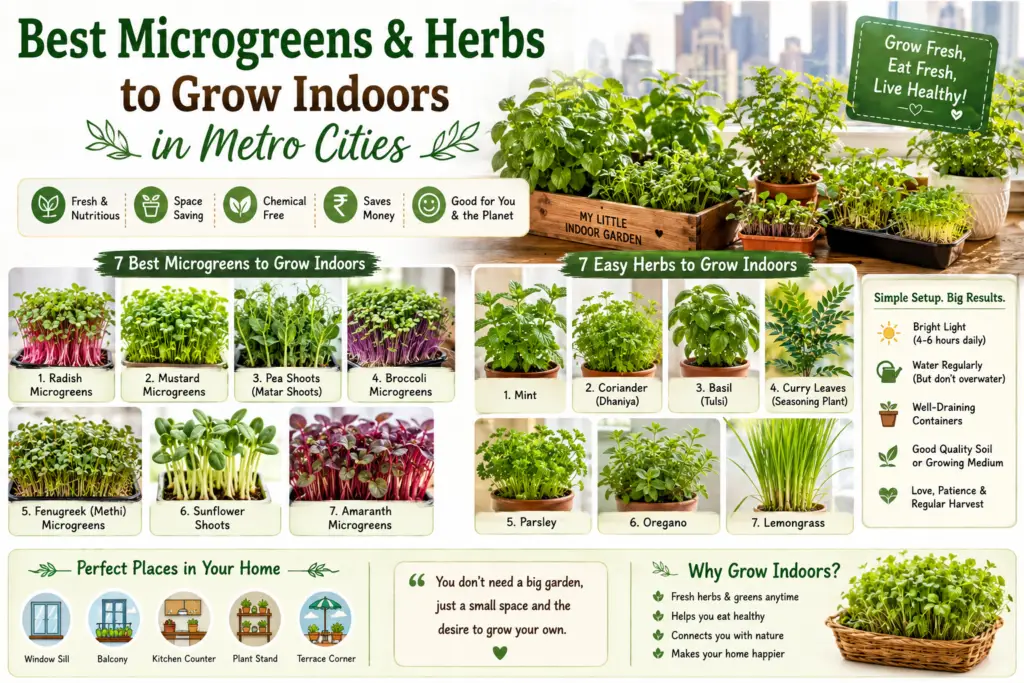
7 Best micro-greens to Grow Indoors
micro-greens are essentially young plants harvested at an early stage. They can add colour, flavour and texture to salads, sandwiches, wraps and other dishes.
Here are some beginner-friendly choices.
1. Radish micro-greens
Radish microgreens are a fantastic choice if you like a slightly peppery flavour.They also tend to grow quickly and can produce attractive green leaves with colourful stems, depending on the variety.Why they’re good for beginnersFast-growingDon’t need much spaceHave a distinctive flavourSuitable for trays and shallow containersTry adding freshly harvested radish microgreens to salads or sandwiches.
2. Mustard micro-greens
If you enjoy a little heat in your food, mustard microgreens are worth trying.They have a slightly spicy flavour and can make a simple salad much more interesting.They are also relatively easy to grow indoors when given suitable light and moisture.Beginner tip: Start with a small tray so you can see how you like their flavour before growing a larger batch.
3. Pea Shoots
Pea shoots have a mild, fresh flavour and a pleasant crunch.They are particularly enjoyable because they can grow into attractive little shoots that are fun to watch.You can harvest the young shoots and use them in salads, sandwiches and stir-fries.
4. Broccoli micro-greens
Broccoli microgreens are another popular option for indoor growing.They have a mild flavour and can be grown in relatively small trays.If you’re interested in growing microgreens mainly for adding variety to your meals, broccoli is a useful one to try.
5.Methi microgreens
For Indian households, methi microgreens are an especially practical choice.Fenugreek seeds are familiar, readily available in many kitchens and can be used for growing young greens under suitable conditions.Their distinctive flavour works well with Indian meals and salads.Important: Use seeds intended for growing where possible, and avoid seeds that have been chemically treated for planting.
6. Sunflower Shoots
Sunflower shoots are slightly larger and more substantial than many other microgreens.They have a mild, nutty flavour and can add texture to salads and other dishes.They require a little more space than tiny microgreens but can still be grown indoors in trays.
7. Amaranth micro-greens
Amaranth microgreens can add a lovely splash of colour to your indoor growing space.Depending on the variety, young leaves can have attractive reddish or green tones.They can be a fun choice when you want your indoor garden to look as good as it tastes.
Read More-“Best microgreens to grow indoors – 11 easy crops to try“(external Post)
7 Easy Herbs to Grow Indoors
micro-greens aren’t the only option for apartment gardeners. Several herbs can also grow successfully in containers when provided with suitable conditions.
1. Mint
Mint is one of the easiest herbs for many beginners.It grows readily when given adequate moisture and suitable light. It is also useful in drinks, chutneys, salads and everyday cooking.One thing to remember: mint can spread aggressively, so keeping it in its own container is usually a good idea.
2. Coriander
Coriander is a kitchen favourite in many Indian homes.Its fresh leaves can be used in curries, chutneys, soups, salads and garnishes.Growing coriander indoors can be a little tricky because it doesn’t always like being disturbed. Direct sowing into its final container is often a better approach than repeatedly transplanting young plants.
Beginner tip: Sow a small amount at intervals rather than planting everything at once.
3. Basil
Basil can be a beautiful addition to a sunny indoor garden.It enjoys warmth and bright light and can be used in salads, sauces and many other dishes.Regularly harvesting the leaves and pinching growing tips can help encourage bushier growth.
4. Curry Leaves
If you have enough light and patience, a curry leaf plant can be a rewarding addition to an Indian home garden.It generally needs more space and time than small herbs such as mint or coriander, so it is better suited to a larger pot near a bright window or balcony.
Keep in mind: A young curry leaf plant won’t provide a large harvest immediately. Think of it as a long-term addition to your home garden.
5. Parsley
Parsley can grow in containers and is useful for garnishing and cooking.It may take longer to establish than some quick-growing herbs, but once growing well, it can provide fresh leaves for your kitchen.
6. Oregano
Oregano is a useful herb if you enjoy Italian or Mediterranean-style cooking.It generally prefers good light and well-draining growing conditions.Let the growing medium dry slightly between watering rather than keeping it constantly wet.
7. Lemongrass
Lemongrass can be grown in a container and is particularly useful for cooking and drinks.It needs more room than tiny herbs, so choose a reasonably large container and give it suitable light.
How Much Sunlight Do Indoor Herbs and micro-greens Need?
This is one of the most important questions for apartment gardeners.
A bright window can provide useful natural light, but the amount of sunlight reaching your plants depends on the direction of the window, nearby buildings, curtains and the season.
micro-greens generally have relatively simple light requirements during their short growing period, while herbs often need good light to remain healthy and productive.
If your home receives very little natural light, you may need to consider a suitable indoor grow light.Don’t assume that placing a plant beside a window automatically means it is getting enough light. Watch the plant.
Long, weak, stretched growth can be a sign that it needs more light.
Consider:A bright kitchen windowsill
A sunny bedroom window
A balcony shelf
A small plant stand near a bright window
A well-lit utility area
A terrace corner, if available
Keep plants away from places where they can easily be knocked over.
Also make sure containers have proper drainage so excess water doesn’t damage your furniture or flooring.
A Simple Indoor Growing Setup
7You can start without buying lots of gardening equipment.
Shallow growing trays
For microgreens, you may need
Suitable growing medium
Good-quality seeds
Water
A bright locationFor herbs, consider:Small or medium-sized potsContainers with drainage holes
Suitable potting mixHerb seeds or healthy seedlings
A sunny locationThat’s really it.You can always improve your setup once you become more confident.
Common Mistakes Beginners Should Avoid
Indoor gardening is simple, but a few common mistakes can cause problems.
over watering
This is probably one of the biggest mistakes beginners make.Plants need water, but constantly wet soil can cause root problems and encourage fungal issues.
Not Enough Light
A plant may survive in poor light without actually growing well.If your herb becomes pale, weak or unusually stretched, check its light conditions.
Too Many Plants
It’s easy to get excited and buy ten different varieties at once.Start with three or four. Once you’ve learned what works in your home, expand gradually
Poor Drainage
Always make sure containers can drain excess water.A decorative pot without drainage may look beautiful, but it can become a problem for plant roots.
Ignoring Hygiene
For microgreens, cleanliness is particularly important because they are grown and harvested young.
Use clean trays and containers, clean water and good-quality growing material. Avoid using mouldy or contaminated seeds or growing medium.
read More -“Easy Vegetables to Grow at Home for Beginners”
Micro-greens vs Herbs: Which Is Better?
It depends on what you want.
Choose microgreens if you want:
A quick harvest
Very little space required
To experiment with different flavours
Something fun for beginners
Choose herbs if you want:
Fresh leaves over a longer period
Ingredients for everyday cooking
Plants that can become a more permanent part of your indoor garden
And honestly, you don’t have to choose.A small tray of microgreens alongside pots of mint, coriander and basil can make a lovely little indoor garden.
Final Thoughts
Living in a metro city doesn’t mean giving up on gardening.
You may not have a large backyard, but a bright windowsill or small balcony can still become a productive little growing space.
Start with something simple. Try radish or methi microgreens, or grow mint, coriander or basil in a pot.
Don’t worry if your first attempt isn’t perfect. Some seeds will sprout beautifully, while others may surprise you by doing absolutely nothing. That’s part of gardening!
The real joy is learning what works in your home and gradually building your own little green corner.
A few pots, a handful of seeds and a little patience can bring a surprising amount of freshness into city life.
Frequently Asked Questions
1. What are the easiest microgreens to grow indoors?
Radish, mustard, broccoli, pea shoots and fenugreek microgreens are good options for beginners. Choose varieties suited to indoor growing and follow the seed supplier’s instructions.
2. Which herbs are easiest to grow indoors?
Mint, basil and coriander are popular choices for indoor growing. Their success depends on suitable light, containers, growing medium and watering.
3. Can I grow microgreens without sunlight?
micro-greens need suitable light for healthy growth. If natural light is insufficient, an appropriate indoor grow light can be used.
4. Can I grow coriander indoors in an apartment?
Yes. Coriander can be grown in a suitable container indoors, particularly where there is good natural light. Direct sowing into its final container can help because coriander can dislike root disturbance.
5. How long do microgreens take to grow?
The harvest time varies by variety and growing conditions. Many microgreens can be harvested within roughly 1–3 weeks, but always follow the specific growing instructions for your chosen seeds.
6. Can I grow herbs on a kitchen windowsill?
Yes, provided the windowsill receives suitable light and has enough space for safe containers. Make sure excess water cannot damage the sill.
7. Are home-grown microgreens healthier than vegetables from a shop?
micro-greens can be a nutritious addition to a varied diet, but you should not assume that home-grown produce is automatically healthier or safer. Clean growing practices, suitable seeds, water and growing materials are important.
8. Can I grow herbs and microgreens in a small flat?
Absolutely. Their small size makes many herbs and microgreens well suited to apartment gardening. Start with a few containers and expand as you learn what works.