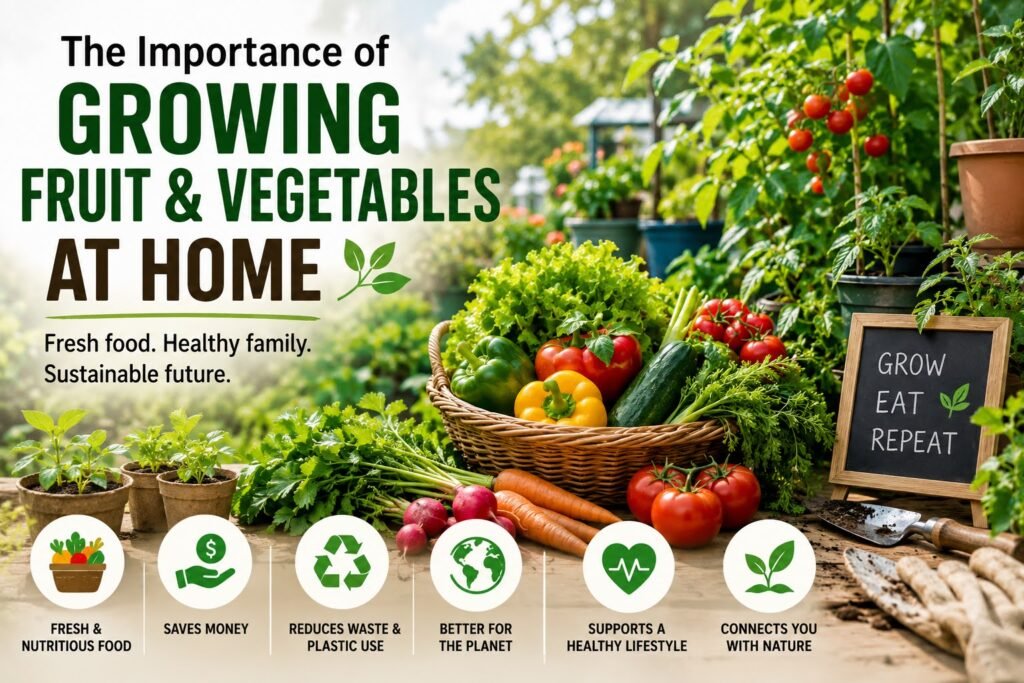
The Importance of Growing Vegetables at H0me
Have you ever looked at a fresh vegetable and thought, “I wonder if I could grow this at home?”The good news is—you probably can!You don’t need a huge garden, expensive equipment, or years of gardening experience to start growing your own food. A sunny balcony, terrace, backyard, or even a few suitable pots can be enough to get started.Growing vegetables at home is rewarding, and there is something special about picking a fresh vegetable that you have grown yourself. It can also encourage sustainable living, reduce some packaging waste, and help you spend more time around nature.If you’re new to gardening, it’s best to start with vegetables that are relatively easy to grow and don’t require complicated care.
Here are 7 easy vegetables to grow at home for beginners
1. Tomatoes
Tomatoes are one of the most popular choices for a home vegetable garden—and for good reason.With enough sunlight, warmth, water and support, tomato plants can grow well in containers as well as garden beds.
How to grow tomatoes at home
Choose a reasonably large pot with good drainage. Use a good-quality potting mix and place the pot where the plant can receive plenty of sunlight.
As the plant grows, it may need a stake or support to keep the stems upright.
Water regularly, but avoid keeping the soil constantly soggy.
One of the nicest parts of growing tomatoes is watching the green fruits gradually change colour as they ripen.
Beginner tip: Start with a variety that is recommended for containers or your local growing conditions.
Radish
If you are impatient to see results from your garden, radishes can be a great choice.They generally grow quickly and don’t require a lot of space, making them suitable for containers and small gardens.
How to grow radishes
Use a container that provides enough depth for the roots to develop. Sow the seeds directly into the soil and keep the soil lightly moist.
Once the plants begin growing, give them enough space so the roots can develop properly.Because radishes can mature relatively quickly, they can give beginners an encouraging first gardening experience.
Beginner tip: Avoid overcrowding the seedlings. Giving them enough room can help produce better-shaped roots.
3. Spinach
Spinach is another useful vegetable for a home garden, especially if you enjoy adding leafy greens to your meals.It can be grown in containers, raised beds, or suitable garden soil.
How to grow spinach
Choose a container with good drainage and use fertile, well-draining soil.
Sow the seeds and keep the soil moist while they germinate.
Spinach generally prefers cooler growing conditions, so choose the appropriate season for your local climate.
You can harvest leaves as needed rather than waiting for the entire plant to mature.
Beginner tip: Harvesting outer leaves carefully can allow the plant to continue producing new growth.
4. Green Beans
Green beans are another good option for beginners and can be particularly fun to grow because you can watch the pods develop.Some varieties grow as compact bushes, while others climb and need support.
How to grow green beans
Plant the seeds in fertile, well-draining soil.
Give the plants plenty of sunlight and water when needed.If you choose a climbing variety, provide a trellis, sticks, or another suitable support for the vines.
Regular harvesting can encourage the plant to continue producing, depending on the variety.Beginner tip: Pick beans while they are young and tender for the best eating quality.
5. Green Onions
Green onions are excellent for small spaces and containers.They don’t need a huge amount of room and can be grown in pots, making them a practical choice for balconies and terraces.How to grow green onions
Choose a container with drainage holes and fill it with a suitable potting mix. Plant seeds or suitable planting material according to the variety you choose.
Place the container somewhere with appropriate sunlight and keep the soil lightly moist.Once the green shoots are established, you can harvest them as needed
.Beginner tip: Plant a small batch every few weeks during a suitable growing season if you want a more continuous supply.
6. Carrots
Carrots may seem like they need a traditional garden, but they can also be grown successfully in containers if you choose a suitable variety and provide enough depth.
The most important thing is giving the developing roots loose soil and enough room to grow.How to grow carrots at home
Choose a deep container with drainage holes. Fill it with loose, well-draining soil without large stones or clumps.
Sow the seeds directly into the soil and keep it evenly moist while they germinate.Be patient—what is happening beneath the soil is the exciting part!
When the carrots have reached a suitable size, gently loosen the soil and harvest them.
Beginner tip: Choose shorter or container-friendly carrot varieties if your growing space is limited.
7. Chillies
For many home gardeners, chillies are a particularly rewarding crop.A single healthy plant can produce a useful harvest, and chillies can be grown in containers when provided with suitable conditions.How to grow chillies
Use a container with good drainage and a fertile, well-draining potting mix.
Place the plant in a warm, sunny location.
Water when needed, but don’t leave the roots sitting in water.
As the plant grows, keep an eye out for common pests and signs of stress.
Beginner tip: Choose a chilli variety suited to your local climate and available space.
External links —
Read More. “Which are some good and easy vegetable to grow at home in India?”
Which Vegetable Should a Beginner Grow First?
If you’re completely new to gardening, don’t feel that you need to grow all seven vegetables at once.Start with two or three.For a small balcony, you might begin with: Green onions Radishes Chillies Spinach If you have more space, you could add tomatoes, beans and carrots. The best vegetables to grow at home are the ones that suit your climate, sunlight, available space and the foods you actually enjoy eating.
5 Simple Tips for Growing Vegetables at Home
Starting a vegetable garden doesn’t have to be complicated. Keep these basics in mind.
1. Give plants enough sunlight
Most vegetables need plenty of sunlight to grow well. Before planting, observe how much sunlight your balcony, terrace or garden receives
2. Don’t over water
More water doesn’t always mean healthier plants. Excess water can cause root problems.Check the soil and water according to the plant’s needs and the weather.
3. Make sure containers drain properly
If you’re growing vegetables in pots, drainage holes are essential. Water needs somewhere to escape.
4. Start smallI
it’s tempting to buy lots of seeds when you’re excited about gardening. But starting with a few plants makes learning much easier.
5. Don’t worry about mistakes
Some plants may grow beautifully. Others may struggle.That’s normal.Gardening is a process of learning. Every failed seed or struggling plant teaches you something that can help with your next attempt.
Why Grow Vegetables at Home?
nowadays ,it is also common to hear that vegetables are “injected with chemicals” to make them grow faster. This is a broad claim and should not be applied to vegetables in general. Different crops are grown using different farming methods, and regulated agricultural practices vary.
One advantage of growing vegetables at home is that you have greater control over how your plants are cared for. You can choose natural gardening methods, use compost, avoid unnecessary pesticides and grow vegetables according to your own preferences.
That doesn’t automatically make every home-grown vegetable chemical-free or organic. Good gardening practices still matter. But knowing what you use on your plants—and how you use it—can give you greater confidence about the food you grow.
Final Thoughts
Growing vegetables at home can be surprisingly simple when you start with the right plants.Tomatoes, radishes, spinach, green beans, green onions, carrots and chillies are all worth considering for a beginner’s garden, provided they suit your local growing conditions.Don’t worry about creating a perfect garden. Your first goal should simply be to grow something.Plant a few seeds, watch them grow, learn from the experience, and enjoy your first harvest.Because when you grow your own food, even a handful of vegetables can feel like a little victory.
Frequently Asked Questions
1. What are the easiest vegetables to grow at home?
Some beginner-friendly choices include tomatoes, radishes, spinach, green beans, green onions, carrots and chillies. The best choice depends on your local climate, growing season, sunlight and available space.
2. Can I grow vegetables without a garden?
Yes. Many vegetables can be grown in suitable containers on balconies, terraces and other sunny spaces. Choose containers with adequate drainage and enough room for the plant’s roots.
3. What vegetables grow well in pots?
Radishes, spinach, green onions, chillies and tomatoes can be suitable for container gardening. Carrots can also be grown in sufficiently deep containers, particularly shorter varieties.
4. How much sunlight do vegetables need?
Many vegetables need several hours of sunlight each day, although the exact requirement varies by plant. Check the growing requirements of each vegetable and observe the amount of sunlight available in your space.
5. How often should I water vegetables?
There is no single watering schedule for every vegetable. Check the soil regularly and water when needed. Weather, temperature, container size and plant variety can all affect how often watering is required.
6. Can beginners grow vegetables from seeds?
Absolutely. Many vegetables can be started from seeds. Follow the instructions for the particular variety and choose a planting season suitable for your local climate.
7. Is growing vegetables at home cheaper?
It can reduce spending on some frequently used vegetables, but gardening also has initial costs such as seeds, containers, soil and tools. Savings depend on what you grow and how m